Last updated: August 16, 2026
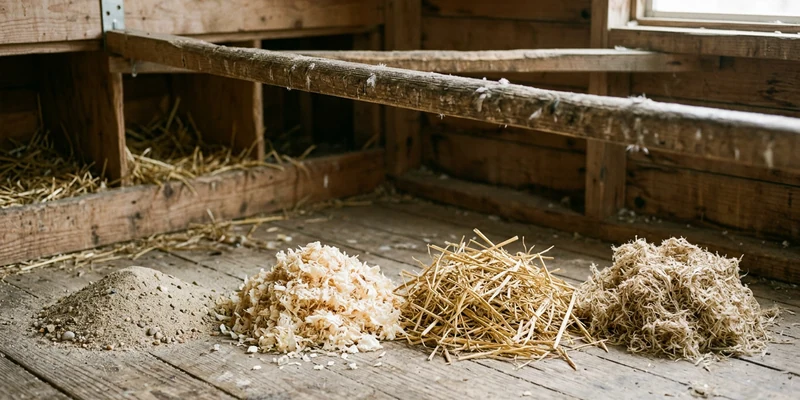
Chicken bedding looks like a minor detail until it is not: the wrong choice leaves a coop smelling of ammonia within a week, or a floor that stays damp long after the rest of the run has dried out. Sand, pine shavings, straw, and the deep litter method are the four options that come up again and again among keepers, and each solves the moisture and odor problem in a genuinely different way.
This guide compares the main chicken bedding options, explains how the deep litter method works and when it makes sense, and covers how often a coop actually needs cleaning depending on which bedding you choose.
Quick Answer
What is the best chicken coop bedding?
- Sand drains well, stays drier, and is easy to scoop, though it does not compost as readily as other materials.
- Pine shavings are absorbent and inexpensive, but need regular topping up and full cleanouts more often than sand.
- Straw insulates well in cold climates but compacts and holds moisture more than shavings if it is not turned regularly.
- The deep litter method builds up bedding over months instead of removing it weekly, and works best with dry, well ventilated coops managed carefully.
Chicken Bedding Comparison
Each material trades off differently between cost, absorbency, and maintenance. This table is the fastest way to match a bedding type to your coop and climate.
| Bedding | Strengths | Watch for |
|---|---|---|
| Sand | Drains well, low odor, easy to scoop and stay dry | Does not compost easily; needs a well drained base |
| Pine shavings | Absorbent, inexpensive, composts well | Dust in sensitive flocks; regular topping up needed |
| Straw | Good insulation value in cold climates | Compacts and holds moisture if not turned regularly |
| Deep litter method | Less frequent full cleanouts, generates some winter warmth | Requires consistent ventilation and monitoring to stay dry |
Sand: The Low-Odor, High-Drainage Option
Sand does not absorb moisture the way organic bedding does, it lets liquid drain through and dry quickly, which keeps bacterial growth and odor lower than most alternatives. Medium to coarse grain sand works best, since it stays cleaner and produces less dust than fine sand. Many keepers scoop it much like a litter box, removing droppings regularly while the sand itself stays in place for months.

The tradeoff is drainage and disposal. Sand needs a base that actually drains, since it can hold water if the ground underneath stays soggy, and used sand is harder to compost than shavings or straw. It also has a real upfront cost and weight to haul in, which is worth planning for before committing to a full coop floor of it.
Pine Shavings: The Familiar Default
Pine shavings for chickens remain the most widely used chicken bedding option for good reason: they are absorbent, inexpensive, relatively easy to source, and compost well once removed. Fluffing shavings periodically helps maintain airflow through the bedding layer, which slows ammonia buildup between cleanings.

The downsides show up gradually. Shavings need regular topping up as they compress and absorb, dust can be a concern for flocks with any respiratory sensitivity, and a full coop of used shavings is bulkier to haul out than an equivalent depth of sand. Kiln-dried pine shavings are the standard choice; avoid cedar shavings specifically, since cedar’s aromatic oils have been linked to respiratory irritation in poultry, even though cedar lumber used in coop construction itself is not the same concern.
Straw: Warm but High-Maintenance
Straw’s main advantage is insulation, a thick layer traps air well and adds real warmth value in a cold climate coop, which is why some keepers use it seasonally even if they prefer another bedding the rest of the year. It is also generally inexpensive and easy to source in most regions with any agricultural activity nearby.
The maintenance cost is where straw falls behind shavings and sand. It compacts under foot traffic faster than shavings, and a compacted, damp layer of straw holds moisture and can mat down in a way that traps ammonia rather than letting it dissipate. Straw works best when turned or fluffed regularly, which makes it a better fit for keepers willing to check bedding condition often than for a low-maintenance setup.
The Deep Litter Method: How It Actually Works
The deep litter method starts with roughly 4 to 6 inches of dry bedding, usually pine shavings, and instead of removing it weekly, fresh material is added on top as the layer compacts and soils. Over the course of a season the litter can build to 8 to 12 inches deep, with some keepers managing it up to around 18 inches before a full cleanout. Turning the litter occasionally, whether by hand or by letting the flock scratch through it, helps beneficial microbial activity break down droppings in place rather than letting them sit on the surface.
The method works best in a coop with reliable ventilation and a dry base to start from, since deep litter that stays consistently damp will develop odor and ammonia problems faster than a shallow layer that gets removed regularly. It pairs naturally with a walk-in coop, where the extra headroom makes turning a deepening litter layer far easier than reaching into a low structure.
Deep litter ends as compost rather than waste, which is the part most people underestimate. Our guide to composting chicken manure covers what to do with it once the layer comes out.
How Often Should You Actually Clean a Coop?
Cleaning frequency depends heavily on which bedding method you use and how large the coop is relative to your flock. A shallow layer of shavings or straw generally needs spot cleaning weekly and a fuller cleanout every few weeks, while sand can often go longer between full changes thanks to its drainage and scoopability. A deep litter system is managed differently again, with occasional turning replacing frequent removal and a full cleanout happening perhaps once or twice a year rather than monthly.
Whatever the schedule, watch the coop itself rather than following a fixed calendar rigidly: a persistent ammonia smell, visibly damp bedding, or excess dust are all signs a cleanout is overdue regardless of how recently the last one happened. Our guide on chicken coop plans covers ventilation design, which affects how quickly bedding of any type stays dry between cleanings.
Damp bedding is also the single biggest driver of a fly problem, which shows up faster in summer than most keepers expect. Our guide on flies and pests around the coop covers the bedding side of that.
Common Mistakes With Coop Bedding
- Using cedar shavings. Cedar’s aromatic oils are linked to respiratory irritation in poultry. Kiln-dried pine is the standard safe choice.
- Letting straw compact without turning it. A matted layer traps moisture and ammonia instead of letting it dissipate.
- Starting a deep litter system in a poorly ventilated coop. Without airflow, deep litter stays damp and develops odor problems fast.
- Ignoring drainage under a sand floor. Sand over a poorly drained base can hold water instead of shedding it.
- Cleaning on a fixed schedule instead of watching for signs. Smell, dampness, and dust are better indicators than a calendar date.
Frequently Asked Questions
Is sand or pine shavings better for a chicken coop? Sand drains better and stays drier with less odor, while pine shavings are cheaper, more absorbent initially, and compost more easily. Many keepers choose based on climate and how often they want to do a full cleanout.
How deep should chicken coop bedding be? A common starting depth is 4 to 6 inches for shavings or straw. Under the deep litter method, the layer is allowed to build up to roughly 8 to 12 inches, sometimes further, before a full cleanout.
Is the deep litter method safe for chickens? Yes, when the coop is well ventilated and the litter stays reasonably dry. Persistent dampness or ammonia smell means the system needs attention, more turning, better ventilation, or a partial cleanout.
Can you use cedar shavings for chicken bedding? It is not recommended. Cedar’s aromatic oils are linked to respiratory irritation in poultry, so kiln-dried pine shavings are the safer standard choice.
How often should you clean a chicken coop? It depends on the bedding method: shallow shavings or straw often need a full cleanout every few weeks, sand can go longer, and deep litter systems may only need a full cleanout once or twice a year.
Does bedding choice affect egg production? Bedding itself is not a direct cause, but a damp, ammonia-heavy coop adds stress that can contribute to broader flock health issues. Our guide on why chickens stop laying eggs covers other contributing factors.
The Bottom Line
Sand, pine shavings, straw, and the deep litter method all manage moisture and odor differently, and the right choice depends more on your climate and how often you want to clean than on any one bedding being universally best. Whatever you choose, avoid cedar shavings, keep ventilation working, and clean based on the coop’s actual condition rather than a fixed schedule.