Last updated: August 16, 2026
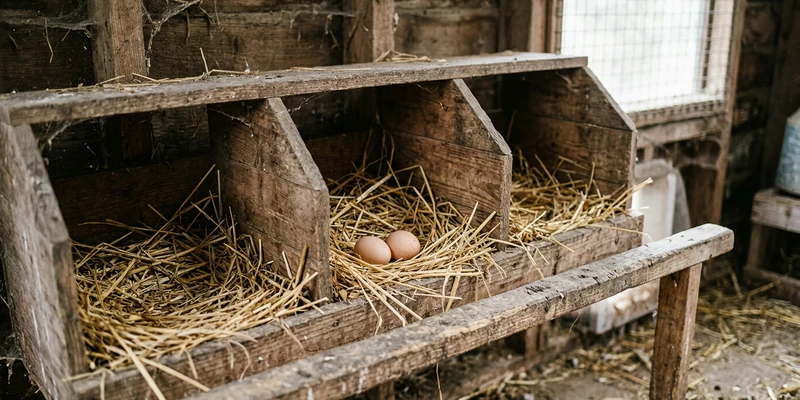
Hens do not need much to lay reliably: a dim, quiet, appropriately sized box, in roughly the right place. Get any one of those wrong and the symptoms show up fast, floor eggs, broken shells, a queue of hens waiting for one favorite box while three others sit empty. Nesting boxes for chickens look like a simple piece of coop equipment, but the sizing, count, and placement decisions behind them are where most of the common problems actually start.
This guide covers how to size and place nesting boxes, how many a flock actually needs, roll away boxes as an alternative worth considering, and where roosting bars fit into the same corner of the coop without competing with the nest boxes for space.
Quick Answer
How should you size and place nesting boxes for chickens?
- A common general guide is roughly 12 by 12 by 12 inches per box for standard breeds, sized down for bantams and up for larger breeds.
- Plan on one box for every 3 to 4 hens; more boxes than that mainly reduces competition since hens often prefer one favorite spot anyway.
- Place boxes lower than the roosting bars, in a dim, quiet corner, so hens do not sleep and soil the nests overnight.
- Roll away boxes trade some nesting comfort for cleaner, harder to peck eggs, which matters more for some flocks than others.
Nesting Box Sizing at a Glance
These are the numbers keepers and coop builders return to most often. Treat them as a starting range to adjust for your specific breeds rather than a fixed rule.
| Element | General guideline | Why it matters |
|---|---|---|
| Box size, standard breeds | Roughly 12 x 12 x 12 inches | Too small discourages use; too large invites more than one hen at a time, raising breakage risk |
| Box size, bantams | Roughly 10 x 12 x 10 inches | Smaller breeds are comfortable in a smaller box and may avoid an oversized one |
| Box size, larger breeds | Roughly 12 x 14 x 12 inches | Extra width accommodates a bigger bird without crowding |
| Number of boxes | 1 box per 3 to 4 hens | Reduces queuing, floor laying, and egg breakage from crowding |
| Height relative to roosts | Lower than the roosting bar | Prevents hens from sleeping and soiling the nest boxes overnight |
Why Box Size Actually Matters
A box that is too small tends to discourage use altogether, pushing hens toward laying on the coop floor instead, which leads to dirtier eggs and a higher chance of breakage underfoot. A box that runs oversized has the opposite problem: it can comfortably fit more than one hen at once, and two hens sharing a box is a common cause of cracked eggs and squabbling.
The 12 by 12 by 12 inch range works for most standard breeds, but it is worth adjusting at the edges. Bantams generally do fine in a slightly smaller box, while larger breeds like Jersey Giants benefit from a bit more width. If you keep a mixed flock, size boxes for your largest breed and let smaller hens use the same space comfortably.
How Many Boxes Does Your Flock Actually Need?
One box for every 3 to 4 hens is the standard rule of thumb, and it holds up well in practice, but it comes with a caveat every keeper eventually notices: hens often develop a strong preference for one particular box regardless of how many others are available. Adding more boxes past the recommended ratio does not eliminate that preference, it just reduces how much competition and queuing happens around the favorite spot.
For a small flock of four to six hens, two boxes is often enough in practice even though the ratio suggests fewer might work. Watching actual usage over the first few weeks tells you more than the math alone, and it is easy to add a box later if egg laying patterns show real crowding.
Placement: Dim, Quiet, and Lower Than the Roost
Nesting boxes work best tucked into the darkest, quietest corner of the coop, away from the main traffic path to feeders and the pop door. Hens prefer privacy while laying, and a box positioned in a high-traffic or brightly lit spot tends to see less consistent use even if the size and count are otherwise correct.
Height matters just as much as location. Boxes should sit lower than the roosting bars, since hens naturally want to sleep as high as possible in the coop, and if the nest boxes are the highest available spot, they will roost in them overnight and soil the bedding, undoing the whole point of a clean nesting area. If floor space allows, our guide on how much space chickens need covers how nest box placement fits into overall coop layout.
Where the boxes can go is largely decided by the coop itself, which is worth thinking about before buying rather than after. Our coop guide covers the layouts that leave room for this.
Roll Away Nesting Boxes: Worth the Upgrade?
A roll away nesting box uses a sloped floor so the egg gently rolls into a protected collection area as soon as it is laid, out of reach of the hen. The main benefit is cleaner eggs with less breakage and less egg eating, a habit that can develop in a flock and is genuinely difficult to break once it starts.

The tradeoff is comfort and cost. Some hens take longer to adjust to a sloped floor, and roll away boxes generally cost more than a simple wooden box. For flocks with a known egg-eating problem or keepers who want minimal daily cleaning, the upgrade tends to pay off. For a small, well-managed flock without that issue, a standard box works just as well.
Roosting Bars: The Other Half of the Corner
Roosting bars deserve a mention alongside nest boxes because the two compete for the same real estate if you do not plan the layout deliberately. A general guideline is about 6 to 10 inches of roost length per bird, positioned higher than the nest boxes, with a flat or rounded bar rather than a round dowel, which is easier on a hen’s feet during long winter nights.
Round or square bars with slightly rounded edges, roughly 2 inches wide, are the common recommendation, set high enough that hens naturally choose the roost over the nest boxes after dark.
Getting this hierarchy right, roosts highest, nest boxes lower and darker, solves most of the “hens sleeping in the nest box” problem before it starts.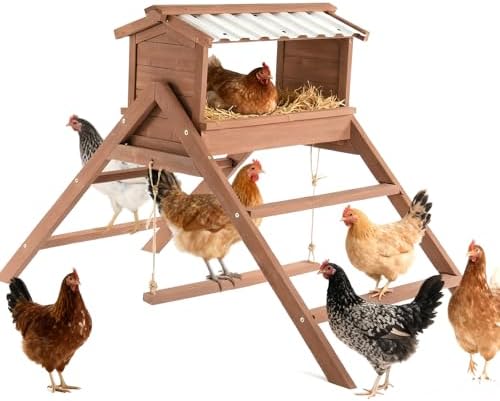
Common Mistakes With Nesting Boxes
- Sizing boxes too large. An oversized box can fit two hens at once, raising the risk of broken or dirtied eggs.
- Placing boxes higher than the roost. Hens will sleep and soil the nests overnight if they are the highest available spot.
- Adding too few boxes for the flock. Crowding around one favorite box leads to floor laying and egg breakage.
- Positioning boxes in a bright, high-traffic spot. Hens prefer privacy while laying and use dim, quiet boxes more consistently.
- Ignoring an egg-eating habit instead of addressing it. A roll away box or prompt egg collection helps prevent the habit from spreading through the flock.
Frequently Asked Questions
What size should nesting boxes for chickens be? A common guideline is roughly 12 by 12 by 12 inches for standard breeds, smaller for bantams and slightly wider for larger breeds like Jersey Giants.
How many nesting boxes do I need for my flock? One box for every 3 to 4 hens is the standard rule of thumb, though hens often favor one box regardless of how many are available.
Should nesting boxes be higher or lower than the roost? Lower. If the nest boxes are the highest spot in the coop, hens will sleep in them overnight and soil the bedding.
Are roll away nesting boxes worth it? They help with egg breakage and egg eating by moving the egg out of reach after laying, which is especially useful for flocks with an established egg-eating habit.
How much roosting bar space does each chicken need? A general guideline is 6 to 10 inches of roost length per bird, on a flat or slightly rounded bar rather than a round dowel.
Why are my hens laying eggs on the floor instead of in the boxes? Common causes include boxes that are too few, poorly placed, too bright, or too small. Our guide on why chickens stop laying eggs covers other causes worth ruling out too.
The Bottom Line
Nesting boxes work best around roughly 12 by 12 by 12 inches, one for every 3 to 4 hens, placed lower than the roosting bars in a dim, quiet corner of the coop. Roll away boxes are a worthwhile upgrade for flocks dealing with breakage or egg eating, and getting the roost-versus-nest-box hierarchy right solves most placement problems before they start.