Last updated: August 16, 2026
Chickens are built for cold far better than they are built for heat. A hen can fluff her feathers and huddle her way through a freezing night, but she cannot sweat, so once temperatures climb she has far fewer tools for shedding heat, which is exactly why summer, not winter, causes more sudden flock deaths in many parts of the country.
Heat stress in chickens, sometimes searched as chicken heat stroke once it reaches a dangerous stage, escalates faster than most keepers expect, moving from mild panting to a genuine emergency within hours on the hottest days. This guide covers how to recognize chicken heat stress early, what actually cools a flock down, how water and electrolytes fit into that picture, and which breeds handle heat better if you are still choosing chickens for a warm climate. Keeping chickens cool in summer comes down to a short list of fundamentals repeated consistently, and everything below builds on that list.
Quick Answer
How do you keep chickens cool and hydrated in summer heat?
- Provide constant shade and airflow. Chickens rely heavily on moving air to shed heat, since they cannot sweat.
- Keep cold, clean water available at more than one spot. Hens drink far more in summer and stop drinking water that has gone warm.
- Watch for panting with wings held away from the body. That is generally the earliest reliable sign of heat stress.
- Add poultry electrolytes to water during the hottest stretches to support hydration, on top of water access rather than instead of it.
Signs of Heat Stress, From Mild to Severe
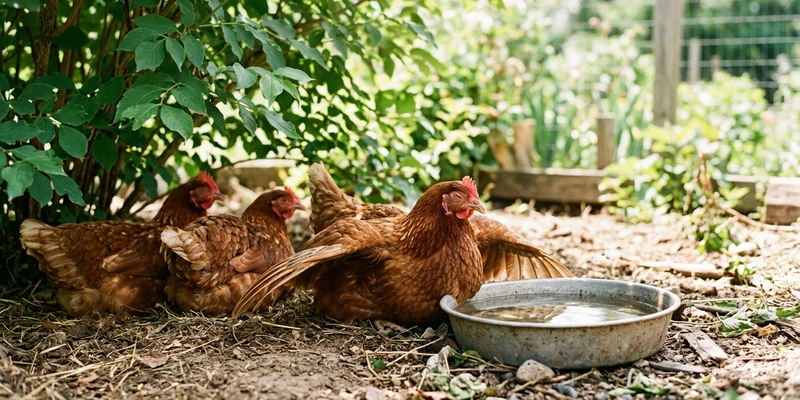
Heat stress moves through recognizable stages, and catching it early makes intervention far easier. The earliest sign is almost always open-mouth panting paired with wings held slightly away from the body, a posture that helps air reach more of the skin and releases heat from areas with less feather coverage.
| Stage | What you will see | What to do |
|---|---|---|
| Mild | Light panting, wings held away from body, seeking shade, reduced activity | Add shade, refresh water, increase airflow immediately |
| Moderate | Heavy open-mouth panting, pale comb, noticeably reduced activity | Move the bird to a cooler, shaded, well-ventilated spot; offer cool water with electrolytes |
| Severe | Lethargy, stumbling, extended neck, gasping, collapse | Cool the bird gradually and contact a veterinarian without delay |
Cooling a severely overheated bird too fast, such as submerging it in cold water, can cause additional shock, so gradual cooling paired with prompt veterinary guidance is the safer path once symptoms reach this stage. This is an emergency to respond to, not a wait-and-see situation, and it is not something a home remedy resolves on its own.
When Heat Actually Becomes Dangerous
Chickens generally start showing mild heat stress signs around 85°F, with real danger setting in above roughly 95°F, especially when combined with high humidity that makes panting less effective at shedding heat. Humidity matters almost as much as the raw temperature, since a hot, humid day can be harder on a flock than a hotter but drier one.
Heavier breeds, older birds, very young birds, and hens already in heavy lay or dealing with another health issue tend to struggle earlier in a heat wave than a healthy, lighter adult. Watch those higher-risk individuals a little more closely once temperatures climb into the danger zone, rather than assuming a general check on the whole flock covers everyone equally.
Shade, Airflow, and Coop Setup
Constant, reliable shade matters more in summer than almost any other single intervention, since chickens seek it out instinctively once they start to overheat. Natural shade from trees or shrubs works well, but a shade cloth or tarp over part of the run is a fast fix if the run itself sits in full sun most of the day. Aim to cover enough of the run that every bird can find shade at once rather than a single small patch that only a few dominant birds end up controlling.

Airflow through the coop matters just as much as shade in the run. A coop that was sealed tight for winter warmth can trap heat badly in summer, so opening vents, propping doors where predator-safe, or adding fans in more severe climates all help move hot, still air out. A stuffy, poorly ventilated coop traps heat exactly when birds need relief from it most.
Water and Electrolytes
Because chickens cannot sweat, they rely heavily on drinking more to manage body temperature, often two to four times their cooler-weather intake, and they generally stop drinking water once it goes warm, which compounds dehydration risk right when they need fluids most. A single waterer that runs dry, sits in direct sun, or is too far from where the flock spends most of its time can turn a hot day into a real health risk fast.
Multiple waterers spaced around the run reduce crowding and make sure every bird, including lower ranking hens that might get pushed away from a single source, has real access. Refreshing water several times a day, placing waterers in shade, or switching to a nipple system that keeps water cleaner and cooler for longer all help keep intake up. Our chicken waterer guide covers waterer types if you are looking to add a second or third source for summer.
What electrolytes do and don’t do
Poultry-safe electrolyte powder added to water a few times a week during extended hot stretches, or after shipping stress or another disruption, helps birds maintain hydration and body salt balance under heat load, on top of clean water access rather than replacing it. Chicken electrolytes are a hydration support tool, not a treatment for illness, and they do not substitute for shade, airflow, or the water access itself.

If a bird shows signs of serious heat stress, pale comb, lethargy, or collapse, treat that as a situation for immediate cooling and a call to a veterinarian, not something an electrolyte mix on its own resolves. Electrolytes support a flock that is already managing heat reasonably well; they are not a substitute for veterinary attention when a bird is genuinely struggling.
How to Cool Down Chickens Fast During a Heat Wave
An unexpected spike, rather than a slow seasonal climb, is when mistakes happen fastest. If you are looking for how to cool down chickens fast during a sudden hot stretch, start with shade and cold water before anything else, since those two changes have the most immediate effect and the least risk of overcorrecting.
Wetting bare dirt in a shaded corner of the run gives birds a cool spot to settle into on their own terms, which many flocks use readily once they discover it. Misting the ground or run area lightly, rather than misting the birds directly, can also help cool the immediate environment on especially brutal days, though it works best as a supplement to shade and airflow rather than a standalone solution. A shallow pan of cool water for feet to stand in helps too, without the shock risk that comes from spraying a hot bird directly with cold water.
Frozen treats, such as fruit or vegetables frozen in a block of water, are a low-risk way to add both hydration and enrichment during a genuine spike. Some keepers also add a few ice cubes to waterers during the hottest stretch of the afternoon, a simple way to knock the water temperature down without any special equipment. Our guide on chicken scratch and treats covers other treat ideas that work well in a summer rotation.
Breeds That Handle Heat Better
Some physical traits consistently show up in heat tolerant chicken breeds: large, exposed combs and wattles that release heat efficiently, lighter body size, and tighter, lower-density feathering rather than the thick, fluffy coats that help in winter. The White Leghorn is the classic example, with its large single comb and lean build both working in its favor during hot weather, the same comb that would be a frostbite liability in a cold climate.
Breeds bred specifically for hot climates, such as the Egyptian Fayoumi or the Naked Neck, take this further with heat-shedding traits like reduced neck feathering. If you already keep a heavily feathered, small-combed breed better suited to cold winters, extra shade, airflow, and water access matter even more for that bird during summer heat waves.
Common Mistakes During Hot Weather
- Leaving the coop sealed the way it was set up for winter. A coop closed tight against drafts in January can trap dangerous heat in July.
- Relying on a single waterer for the whole flock. Crowding around one source leaves lower ranking birds without reliable access, so add a second or third waterer.
- Letting water sit in direct sun. Warm water gets refused right when birds need fluids most, so shade over waterers matters as much as shade over the birds.
- Treating electrolytes as a cure for a sick bird. They support hydration; they are not a substitute for veterinary care when a bird looks genuinely unwell.
- Cooling an overheated bird too fast. Sudden cold water immersion can shock a severely overheated bird; gradual cooling and veterinary guidance are safer.
- Ignoring humidity. A hot, humid day can be more dangerous than a hotter but drier one, since panting loses effectiveness in high humidity.
- Assuming a heat-tolerant breed does not need shade or extra water. Breed helps, but every chicken still needs active cooling support on genuinely dangerous days.
Frequently Asked Questions
What temperature is too hot for chickens? Mild heat stress signs often begin around 85°F, with real danger generally starting above roughly 95°F, especially when humidity is also high.
What is the first sign of heat stress in chickens? Open-mouth panting combined with wings held slightly away from the body is generally the earliest reliable sign, appearing before more serious symptoms like lethargy or pale comb.
Do chickens need a fan in summer? Not always, but moving air helps significantly in genuinely hot climates or during extended heat waves, especially in a coop that lacks strong natural ventilation.
Can I give my chickens ice or cold water in summer? Yes, small amounts of ice can help keep water cool longer on hot days, and cool, fresh water is generally more appealing and effective than water that has warmed in the sun. Refreshing it often matters more than the ice itself.
Which chicken breeds handle heat best? Breeds with large combs, lighter bodies, and tighter feathering, such as the White Leghorn, generally tolerate heat better than heavy, densely feathered cold-climate breeds.
Do chicken electrolytes actually work? They support hydration and help replace minerals lost during heat stress or other disruptions, but they work alongside water access and shade, not as a replacement for either.
Do frozen treats help chickens in the heat? A frozen treat with fruit or vegetables inside can offer both hydration and enrichment during peak afternoon heat, though it supplements rather than replaces plain water access.
Can chickens die from heat? Yes, severe heat stress can be fatal without intervention, which is why shade, water access, and airflow are treated as priorities rather than optional extras in summer.
What should I do if a chicken collapses from heat? Move the bird to a cool, shaded, well-ventilated area, cool it gradually rather than suddenly, and contact a veterinarian immediately. This is an emergency, not a wait-and-see situation.
The Bottom Line
Chickens have limited ways to cool themselves, so shade, airflow, and constant access to cold water at more than one spot do most of the work in a heat wave, with electrolytes as a useful hydration supplement on the hottest days. Learn the early signs of heat stress, panting and lifted wings well before lethargy sets in, and treat any severe symptoms, or a bird that looks seriously overheated, as an emergency that calls for a veterinarian, not a home remedy.
Related Reading
- How to Keep Chickens Warm in Winter Without a Heat Lamp
- Best Chicken Waterer: Top Picks for Backyard Coops
- Cold Hardy Chicken Breeds That Handle Real Winters
- How to Keep Chicken Water From Freezing This Winter
- Chicken Scratch and Treats: What to Feed and When
- Why Do Chickens Stop Laying Eggs? Common Causes Explained
- How Much Space Do Chickens Need? Coop and Run Basics