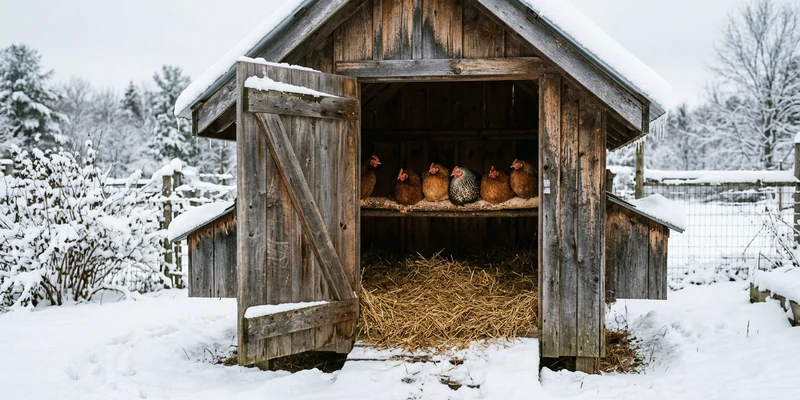
Last updated: August 16, 2026
The instinct is understandable: temperatures drop, and the first thought is to get a heat source into the coop as fast as possible. It is also, according to most agricultural extension offices, usually the wrong first move. Chickens carry their own insulation in the form of feathers, and most breeds tolerate cold remarkably well on their own. The bigger winter threat is not the cold air itself. It is moisture trapped inside a sealed-up coop, which settles on combs and toes and does more damage than a clear, cold night ever would.
This guide covers how to keep chickens warm in winter the way extension offices actually recommend: prioritizing ventilation and dryness over supplemental heat, understanding how cold chickens can tolerate before you need to worry, and knowing which details, like frostbite prevention and water access, matter more than a heat lamp ever will.
Quick Answer
How do you keep chickens warm in winter?
- Focus on a dry, well ventilated, draft-free coop rather than supplemental heat; moisture buildup is generally a bigger frostbite risk than cold air.
- Most standard breeds tolerate freezing temperatures reasonably well thanks to their feathers, though cold tolerance varies by breed and by comb type.
- Keep water from freezing and feed available, since chickens generate body heat partly through digestion.
- Reserve supplemental heat sources for genuine extreme cold emergencies, and only with real fire-safety precautions, since heat lamps are a well known coop fire risk.
Winter Coop Checklist
Extension offices generally frame winter coop management around four priorities, in this order of importance. Heating the coop is deliberately last, not first.
| Priority | What it addresses | General approach |
|---|---|---|
| Ventilation | Moisture and ammonia buildup, the main driver of frostbite | Vents high on the walls, above roost height, kept open year round |
| Draft control | Direct cold air blowing on roosting birds | Block gaps at roost level while keeping high vents open |
| Water and feed access | Hydration and the body heat digestion generates | Prevent freezing with insulated waterers or regular checks; keep feed available |
| Supplemental heat | Extreme cold snaps beyond typical breed tolerance | Used sparingly if at all, with strict fire-safety precautions |
How Cold Can Chickens Tolerate?
Most standard chicken breeds handle freezing temperatures better than new keepers expect, thanks to a dense layer of feathers that traps body heat effectively. Larger, cold-hardy breeds tend to manage winter with the least fuss, while breeds with larger combs and wattles face a higher frostbite risk simply because those fleshy parts are not insulated by feathers the way the rest of the body is. There is no single safe temperature number that applies to every breed, coop setup, and wind condition, so treat cold tolerance as a range that depends on your specific birds and coop rather than a fixed cutoff.
What matters more than the thermometer reading is dryness and shelter from wind. A dry, draft-free coop at a genuinely cold temperature is generally safer for a flock than a damp, poorly ventilated coop at a milder one, because moisture on the skin and feathers is what actually causes cold-weather injury.
Why Ventilation Beats Heating
Sealing up every gap to keep warmth in feels like the obvious move, but a tightly sealed coop traps the moisture that birds produce simply by breathing and the ammonia that builds up from droppings. That trapped humidity is what extension sources point to as the leading cause of frostbite, more than the outside temperature itself. The fix is airflow that removes stale, moist air without blowing directly across the roost: vents positioned high on the walls, above where birds sleep, let warm moist air escape upward while the roost area itself stays comparatively still.
This is also why chicken coop ventilation should be treated as a year-round feature, not a summer-only design element. A coop built with good high vents in July needs the same vents open, not sealed shut, in January. Chicken coop heating, when it is used at all, should never be treated as a substitute for getting ventilation right first.
Frostbite: What Actually Puts a Comb at Risk
Frostbite in chickens typically shows up on combs, wattles, and toes, the parts of the body without a feather layer to insulate them, and moisture is the main aggravating factor rather than cold air alone. Some keepers apply a thin layer of petroleum jelly to combs and wattles on especially cold, damp nights as a barrier against moisture, though this is a preventive habit rather than a guaranteed fix. Breeds with smaller, closer combs tend to be less prone to frostbite than breeds with large, upright combs, which is worth factoring in if you are choosing breeds specifically for a cold climate.
None of this is a substitute for veterinary judgment. If you notice swelling, discoloration, or signs of infection on a comb, wattle, or toe, or if a bird seems unwell beyond typical winter sluggishness, contact a veterinarian or your local agricultural extension office rather than trying to diagnose or treat it yourself.
Water, Feed, and the Overlooked Winter Basics
Frozen water is one of the most common winter failure points, not because keepers forget about it but because it can freeze faster than expected on a genuinely cold day. Options range from swapping frozen waterers for fresh ones multiple times a day to using a heated base designed for outdoor livestock waterers. Whatever the method, birds without reliable access to unfrozen water can dehydrate quickly, and dehydration compounds every other winter stress on the flock.
Feed matters too, since digestion itself generates some body heat. Chickens with reliable access to feed through the day are generally better equipped to maintain their body temperature overnight than birds on a restricted schedule. This is not a reason to overfeed; it is a reason to make sure winter feeding schedules do not accidentally leave birds going into a cold night on an empty crop.
Liquid water is the basic that fails first and matters most. Our guide to keeping chicken water from freezing covers heated bases against insulated designs.
When Supplemental Heat Actually Makes Sense
Extension guidance generally advises against routine supplemental heat for standard breeds in typical winter conditions, both because most flocks do not need it and because heat lamps are a well documented cause of coop fires, particularly in a space full of dry bedding and dust. If you keep breeds known for poor cold tolerance, very young or unwell birds, or you are facing an unusually extreme cold event outside your area’s normal range, some keepers do use carefully installed, secured heat sources as a temporary measure. Any heat source in a coop should be rated for the environment, mounted well away from bedding and combustible material, and checked regularly, since the fire risk is real and the consequences of a coop fire are severe.
If you do decide heat is warranted, how it is mounted matters more than how much it puts out, because coop fires almost always trace back to the fixture rather than the bulb. Our heat lamp guide covers the safer mounting options.
Common Mistakes When Winterizing a Coop
- Sealing the coop completely to keep warmth in. This traps moisture, which is a bigger frostbite risk than cold air. Keep high vents open year round.
- Reaching for a heat lamp as the first fix. Ventilation, dryness, and draft control at roost level solve most winter problems without adding fire risk.
- Letting water freeze unchecked. Dehydration compounds every other cold-weather stress. Check water access multiple times on freezing days.
- Ignoring comb type when choosing breeds for a cold climate. Large combs and wattles carry a higher frostbite risk than smaller, close combs.
- Restricting feed in winter. Digestion helps birds maintain body heat overnight, so consistent feed access matters more, not less, in the cold.
Frequently Asked Questions
How to keep chickens warm in winter without a heat lamp? Prioritize a dry, draft-free, well ventilated coop, keep water from freezing, and ensure consistent feed access. Most standard breeds manage cold well through their own feathers without supplemental heat.
How cold can chickens tolerate? There is no single safe number; it depends on breed, comb type, and how dry and draft-free the coop is. Cold, dry conditions are generally safer than milder, damp ones, since moisture is the bigger risk factor.
Do chickens need chicken coop heating in winter? Most standard breeds in typical winter conditions do not, according to general extension guidance. Heat lamps also carry a real fire risk, so many keepers reserve supplemental heat for extreme cold or vulnerable birds only.
Why is chicken coop ventilation important in cold weather? Trapped moisture and ammonia from droppings are a leading contributor to frostbite. High vents let humid air escape without creating a direct draft on the roost.
What does frostbite on a chicken look like? It typically appears on combs, wattles, and toes as discoloration or swelling. If you notice this or any sign of infection, contact a veterinarian or your local extension office rather than treating it yourself.
Can winter cold affect egg laying? Yes, shorter daylight and cold stress can both reduce egg production over winter. Our guide on why chickens stop laying eggs covers the seasonal side of that in more detail.
The Bottom Line
Keeping chickens warm in winter is less about adding heat and more about removing moisture: a dry, well ventilated, draft-free coop protects a flock better than a heat lamp does, and it avoids the fire risk that comes with one. Watch water access, keep feed consistent, and know your breeds’ comb types and general cold tolerance, then reserve supplemental heat for genuine extremes rather than routine winter nights.