Last updated: August 16, 2026
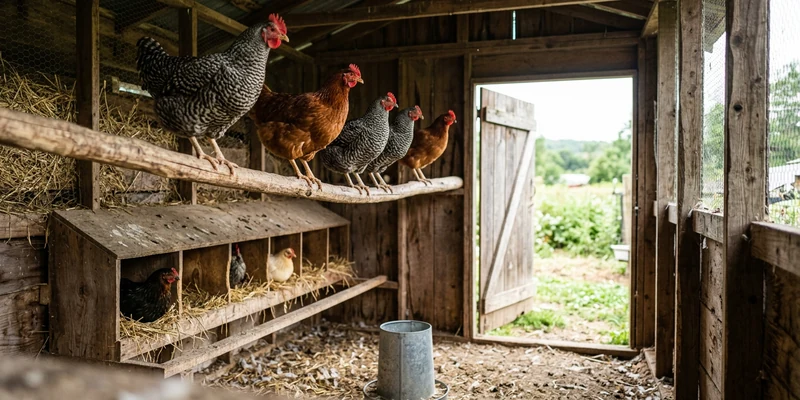
Crouching into a hutch-style coop to collect eggs or scoop out bedding gets old fast, usually somewhere around the third time a keeper bangs a knee on a low doorframe. A walk-in chicken coop solves that specific problem: the interior is tall enough to stand and move around in, which changes daily chores from a crouch-and-reach routine into something closer to walking into a garden shed.
This guide covers what actually makes a coop walk-in, who benefits most from the extra height, and where a walk-in design costs more in materials and footprint without necessarily paying off, so you can decide whether it is worth it for your flock rather than assuming bigger is automatically better.
Quick Answer
Is a walk-in chicken coop worth the extra space and cost?
- Walk-in coops pay off most for larger flocks and keepers who want to stand upright for cleaning, egg collection, and daily checks.
- The extra headroom also makes the deep litter bedding method easier to maintain and adds storage for feed and tools.
- Smaller flocks of flightless or bantam breeds often do fine in a shorter, non-walk-in coop, especially one that is easy to move.
- The tradeoff is footprint and material cost, since a taller structure needs a stronger frame and more space in the yard.
Walk-In vs. Standard Coop at a Glance
Neither style is universally better. This table breaks down where each one tends to win, depending on flock size and how much daily maintenance matters to you.
| Factor | Walk-in coop | Standard coop |
|---|---|---|
| Interior height | Tall enough to stand, generally around 6 ft | Requires crouching or kneeling to access |
| Best flock size | Medium to large flocks | Small flocks, especially bantams or flightless breeds |
| Cleaning access | Easier, supports deep litter management | More labor-intensive, especially deep cleaning |
| Footprint and cost | Larger footprint, higher material cost | Smaller footprint, generally lower cost |
| Portability | Usually stationary | Easier to move if lightweight |
For keepers who already know they need more room, our large chicken coop guide covers walk-in and non-walk-in picks sized for bigger flocks.
What Actually Makes a Coop “Walk-In”
A walk-in chicken coop has enough interior clearance, typically around 6 ft at the center, for an adult to stand upright and move around without stooping. Many designs taper the roofline lower at the sides for weather shedding while keeping the center peak tall enough for comfortable movement. The category covers everything from a simple walk-in shed-style coop to a combined coop-and-run structure where the entire enclosure, not just the sleeping area, is standing height.
What it is not is simply a matter of square footage. A coop can have a large footprint and still require crouching if the roofline sits low, so height, not floor area alone, is the defining feature that separates a walk-in design from a larger standard coop.
Who Actually Benefits From the Extra Height
The clearest case for a walk-in coop is a medium to large flock, where daily chores like egg collection, feeding, and bedding checks happen often enough that crouching becomes a real physical cost over time. Keepers managing eight or more hens, or anyone planning to grow a flock in that direction, tend to notice the difference within the first few weeks of ownership.
Extra headroom also makes the deep litter bedding method more practical, since turning and adding to a deepening layer of litter is far easier standing up than reaching into a low coop. Storage is a secondary benefit: a walk-in coop can hold a feed bin, tools, or spare bedding inside the structure itself, which a smaller coop generally cannot.
When a Standard Coop Makes More Sense
Smaller flocks, particularly of bantam or flightless breeds, often do perfectly well in a shorter coop, and the lower structure has real advantages of its own: less material, a smaller footprint, and in some designs, easier portability if you want to move the coop around the yard periodically. If your flock is small and stable, and daily chores take only a few minutes regardless of coop height, the case for paying more and using more yard space for a walk-in design weakens.
Walk-in coops are also generally harder to move once built, since the taller frame adds weight and the design usually assumes a permanent or semi-permanent placement. If flexibility to relocate the coop matters to you, weigh that against the daily convenience a walk-in provides.
Walk-In Coops in a Small Yard
A walk-in coop does not automatically require a large property. Some designs combine the coop and run into a single walk-in structure that uses vertical space, tall rather than sprawling, which can fit a surprisingly compact footprint while still offering standing headroom throughout. This works especially well when the coop sits against a fence line or garage wall, using existing structure as one side of the build rather than needing clearance on all four sides.
The real constraint in a small yard is usually run space, not the walk-in feature itself. A tall, narrow walk-in coop paired with a modest run still needs to meet the same roughly 8 to 10 sq ft of outdoor space per bird when there is no other outdoor access, so a small footprint generally means a smaller flock rather than a compromise on the space rules themselves. Measuring the actual available footprint before committing to a walk-in design, rather than assuming it will fit because the coop looks compact in photos, avoids a frustrating mismatch once building starts.
Sizing, Predator-Proofing, and Ventilation Still Apply
A walk-in coop does not change the underlying sizing math: plan for roughly 3 to 4 sq ft of indoor space per bird with outdoor run access, and more if birds spend significant time inside. It also does not exempt the coop from predator-proofing. Every extra seam, panel, and vent that comes with a larger structure is another potential entry point, so hardware cloth on openings and a buried or apron-style barrier at ground level matter just as much on a walk-in coop as a small one. Our guide comparing hardware cloth and chicken wire covers the mesh specifics.
Ventilation needs scale with the larger interior volume too. High vents positioned above roost height remain the standard approach, and a bigger coop generally needs proportionally more vent area, not just one opening sized for a small hutch.
Common Mistakes When Choosing a Walk-In Coop
- Assuming a bigger footprint means walk-in height. Check the actual interior clearance, not just the floor dimensions.
- Buying walk-in for a small, stable flock without weighing the cost. A standard coop may serve a small flock just as well for less money and yard space.
- Skipping predator-proofing on the extra panels a larger structure adds. More seams mean more places to check, not fewer.
- Underestimating ventilation needs for the larger interior volume. Vent area should scale with the coop, not stay fixed at a small-coop amount.
- Choosing walk-in for portability. Most walk-in designs are heavier and harder to relocate than a smaller coop.
Frequently Asked Questions
What is a walk in chicken coop? It is a coop, or coop and run combination, with interior clearance tall enough for an adult to stand and move around, generally around 6 ft at the center. A walk in chicken run built the same way extends that standing headroom into the outdoor space as well.
How tall is a walk-in chicken coop? Most designs offer roughly 6 ft of clearance at the center, sometimes tapering lower at the sides for weather shedding while keeping the main area standing height.
Is a walk-in chicken coop worth it for a small flock? Often not necessary. Smaller flocks, especially bantams or flightless breeds, tend to do well in a shorter coop, and the extra cost and footprint of a walk-in design may not pay off.
Does a walk-in coop need more ventilation than a standard coop? Yes, proportionally. A larger interior volume generally needs more vent area, positioned high on the walls above roost height.
Can a walk-in coop be moved around the yard? Most walk-in designs are heavier and intended as a semi-permanent or permanent structure, unlike some lightweight standard coops that can be relocated more easily.
Do walk-in coops need extra predator-proofing? They need the same standard of predator-proofing as any coop, just applied across more seams, panels, and vents due to the larger structure.
What is the benefit of a walk-in coop besides standing room? Easier deep litter bedding management and built-in storage for feed or tools are common secondary benefits beyond simply not having to crouch.
The Bottom Line
A walk-in chicken coop earns its extra cost and footprint for medium to large flocks and keepers who want standing-room access for daily chores, but a smaller, stable flock often does just as well in a standard coop. Either way, sizing, ventilation, and predator-proofing scale with the structure, so a bigger coop means more, not less, attention to those details.