Last updated: August 16, 2026
A waterer that was full and liquid at dusk can be a solid block of ice by morning once temperatures drop below freezing, and it is one of the most common winter failure points for backyard flocks. Chickens generally handle cold air itself better than new keepers expect, but they cannot handle going without water, and dehydration compounds every other cold weather stress on a flock.
This guide covers the practical ways keepers keep chicken water from freezing through the winter, from no-cost routines to heated equipment, so water access stops being the thing that goes wrong on the coldest mornings.
Quick Answer
How do you keep chicken water from freezing?
- A heated waterer base or a heated waterer built with an internal element keeps water liquid without daily intervention.
- Without electricity, swapping frozen waterers for fresh ones multiple times a day is the reliable fallback.
- Placing waterers in a sheltered, sun exposed spot and off frozen ground slows how fast they freeze.
- Never rely on a heat lamp near the waterer as a freeze fix; heat lamps near bedding are a documented coop fire risk.
Methods Compared
Chicken waterer freezing is less about any single fix and more about picking the method, or combination of methods, that matches your coop’s electricity access and your local winters.
Most keepers land on one of these approaches, often combining more than one depending on how cold the winter gets.
| Method | How it works | Best for |
|---|---|---|
| Heated waterer base | An electric base sits under a standard waterer and keeps it above freezing | Coops with electricity already run to them |
| Heated waterer | A waterer with a built-in heating element | Simplifying to one piece of equipment instead of two |
| Swap and refill | Replace frozen waterers with fresh ones a few times a day | Coops without electricity access |
| Insulated cover or wrap | Slows heat loss without adding electricity | Milder climates or as a supplement to other methods |
Why Frozen Water Is a Bigger Problem Than It Looks
Chickens carry natural insulation in their feathers and, according to most agricultural extension guidance, tolerate cold air itself reasonably well. Water is a different story: it can freeze faster than a keeper expects on a genuinely cold day, and birds without reliable access to unfrozen water can dehydrate quickly. Dehydration then makes every other winter stress worse, since digestion, which helps birds maintain body heat overnight, depends on adequate hydration too. Our guide on keeping chickens warm in winter covers how water fits into the bigger winter picture.
This is exactly why water access, not supplemental heat for the birds themselves, tends to top most extension checklists for winter coop management.
Heated Bases and Heated Waterers
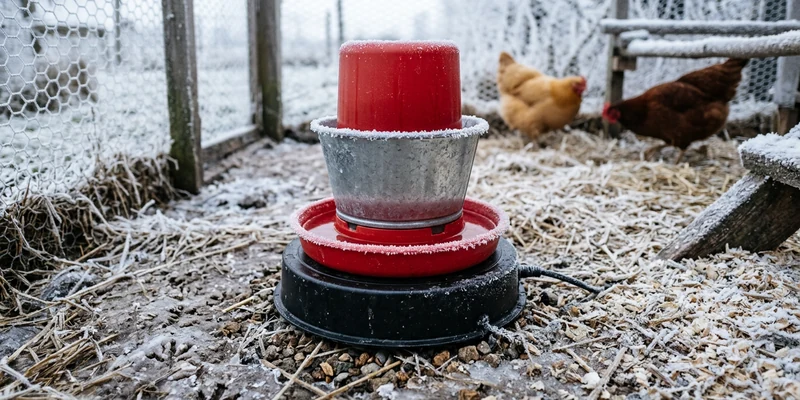
For coops with electricity already run to them, a chicken waterer heater base placed under a standard metal waterer is one of the simplest fixes: the base keeps the water just above freezing without heating the whole coop or requiring daily attention. A heated chicken waterer with a built-in heating element does the same job in one piece of equipment rather than two, which some keepers prefer for simplicity.


Whatever heated equipment you choose, check the cord and connections periodically through the season, since outdoor electrical equipment exposed to moisture and cold needs more attention than the same gear indoors. Our chicken waterer guide covers waterer types more broadly if you are setting one up from scratch.
Swap and Refill Routines Without Electricity
Not every coop has power access, and a swap-and-refill routine is a genuinely workable fallback: keep a spare waterer or two, bring the frozen one inside to thaw while a fresh one goes out, and repeat as needed through the coldest part of the day. It takes more hands-on effort than a heated setup, but it costs nothing beyond the extra waterer and a bit of routine.
Some keepers also add a floating object like a ball to the water surface, since wind and birds moving it around can slow ice from forming a solid sheet, though this works best as a supplement to regular refill checks rather than a standalone fix on genuinely cold days.
Nipple style waterers deserve a specific mention here, since the small nipple mechanism can freeze and jam even when the bulk of the reservoir is still liquid, effectively cutting off access even though there appears to be plenty of water in the container. If you use a nipple waterer through winter, check the nipples themselves, not just the water level, on cold mornings, and consider switching to an open style waterer with a heated base for the coldest months if jamming becomes a recurring problem.
Placement and Insulation Tips
Where a waterer sits matters. A spot with some sun exposure through the day, sheltered from direct wind, and elevated off frozen ground all slow how quickly water freezes compared with a waterer sitting exposed on bare, frozen dirt. An insulated cover or a simple wrap of foam insulation around a waterer’s base can add meaningful time before it freezes solid, particularly in climates with cold but not extreme winters.

Matching Waterer Size to Flock and Climate
A waterer that is too large for a small flock sits mostly full and static, which actually gives it more time to freeze solid than a waterer that gets emptied and refilled through regular use. Conversely, a waterer that is too small for a bigger flock runs dry fast even without freezing being a factor, forcing more frequent refills regardless of temperature. Matching size to flock roughly, then adjusting seasonally, tends to work better than picking one waterer and assuming it fits every situation.
Climate matters too. Keepers in regions with brief, mild freezes might get by with insulation and good placement alone, while keepers facing weeks of sustained hard freezes generally find a heated setup pays for itself in saved time and effort well before winter is over. There is no single right answer here, only a setup that matches your actual winters rather than someone else’s. Talking with other keepers in your specific area, through a local poultry club or an online community, is often a faster way to learn what actually holds up through a typical winter than trial and error alone.
Common Mistakes to Avoid
- Relying on a heat lamp to keep water from freezing. Heat lamps near bedding are a well documented fire risk. Use equipment built specifically for waterers instead.
- Checking water only once a day. On genuinely cold days, water can refreeze faster than a single daily check accounts for.
- Ignoring cord and connection maintenance on heated equipment. Outdoor electrical gear exposed to moisture needs periodic checks through the season.
- Placing waterers directly on frozen, exposed ground. Elevating and sheltering the waterer slows freezing meaningfully.
- Assuming chickens can go a whole freezing day without water. Dehydration compounds every other winter stress on a flock.
Frequently Asked Questions
What is the easiest way to keep chicken water from freezing? A heated waterer base is the lowest-effort option for coops with electricity. Without power, a swap-and-refill routine a few times a day is the reliable fallback.
Is it safe to use a heat lamp to prevent water from freezing? No. Heat lamps near bedding and dust are a documented coop fire risk. Use equipment designed specifically for waterers instead.
How often does chicken water need to be checked in winter? Multiple times a day on genuinely cold days, since water can refreeze faster than expected without a heated setup.
Does adding salt or another additive stop water from freezing? This is not a recommended approach for drinking water meant for a flock; stick to heated equipment or manual refill routines instead.
Can I use a heated dog bowl for chicken water? Some keepers do, though a product built specifically for poultry waterers is generally a better match for coop conditions and flock size.
Do chickens still need water access on very cold days? Yes. Water access matters just as much, or more, in freezing weather, since dehydration compounds other winter stresses on a flock.
The Bottom Line
Keeping chicken water from freezing comes down to picking a method that matches your setup, a heated base or heated waterer if you have electricity, a swap-and-refill routine if you do not, and backing it up with smart placement and regular checks on the coldest days. Skip the heat lamp shortcut entirely, since the fire risk outweighs the convenience, and treat water access as seriously as any other part of winter coop care.