Last updated: August 16, 2026
Flies in chicken coop numbers can climb fast once warm weather hits, and once they arrive they bring more than annoyance: they spread bacteria between the coop, the run, and anywhere else they land. Flies are not the only uninvited guests a backyard flock attracts either. Spilled feed and warm, sheltered coop structures draw in a range of pests, and most of them trace back to the same root causes.
This guide covers how to get rid of flies in chicken coop spaces and the wider pest picture around a backyard flock, focusing on the sanitation habits that extension sources consistently point to as the real fix, rather than one-off sprays that treat the symptom instead of the cause.
Quick Answer
How do you control flies and pests around a chicken coop?
- Remove droppings from under roosts regularly, since wet manure is where most coop flies actually breed.
- Keep bedding dry and fluffed rather than damp and compacted, and manage any manure pile away from the coop itself.
- Store feed in sealed, rodent- and insect-proof containers, since spilled grain draws flies, ants, and rodents alike.
- Use fly traps and eliminate standing water as supporting measures, not as a substitute for good manure and bedding management.
Coop Pest Control at a Glance
Most coop pest problems share a small set of root causes. This table maps the usual suspects to the fix that actually addresses them.
| Pest | What draws them in | Main fix |
|---|---|---|
| Flies | Wet, exposed manure and damp bedding | Frequent manure removal, dry bedding, fly traps as backup |
| Ants and beetles | Spilled feed and sugary treat residue | Sealed feed storage, cleaning up spills promptly |
| Wasps and hornets | Sheltered eaves, gaps, and unused coop corners | Sealing gaps, checking eaves each spring |
| Rodents | Spilled feed, clutter, warm shelter | Covered separately in our rats and mice guide |
Why Flies Show Up Around Chicken Coops in the First Place
House flies and other filth flies breed in warm, moist organic material, and a coop with manure sitting under the roosts is close to ideal breeding habitat during hot weather. Extension sources on poultry facilities consistently point to sanitation, not sprays, as the single most effective lever for keeping fly numbers down, since even the best fly trap cannot keep pace with a constant new supply of breeding sites.
Warm months are when the problem escalates fastest, since fly life cycles shorten in the heat and a small population can multiply into a real nuisance within days if manure and wet bedding are left undisturbed.
Manure and Bedding Habits That Actually Reduce Flies
Removing droppings from under the roosts on a regular basis, daily during the hottest stretches of summer, is the step extension guidance highlights most often for fly control. Keeping bedding dry and fluffed rather than damp and compacted matters just as much, since flies need moisture to lay eggs and a dry litter layer denies them that.

Moving removed manure into a properly managed compost pile, rather than leaving it in a loose heap near the coop, keeps the material actively decomposing instead of sitting wet and exposed. Our guide on composting chicken manure covers how to set that system up so it works with your fly control efforts instead of undermining them.
Feed Storage and General Coop Sanitation
Spilled feed is a magnet for flies, ants, and rodents alike, so storing feed in a sealed, chew-resistant container and cleaning up spills at the end of the day removes one of the biggest food sources pests rely on.

Standing water, whether from a leaking waterer or a low spot that collects rain, gives flies and mosquitoes another place to breed, so checking the run for puddles after wet weather is worth adding to a routine coop check. Treats and scraps left scattered rather than eaten quickly can also draw pests overnight if they are not cleaned up.
Traps and Physical Controls Worth Using
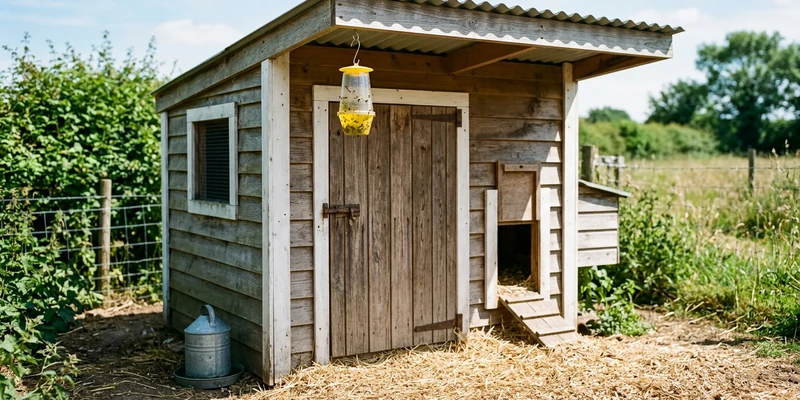
Fly traps, whether the disposable bag type or a reusable jar trap, are a reasonable supporting tool once the underlying sanitation issues are addressed, and placing them a short distance from the coop rather than right at the door tends to draw flies away from the birds rather than toward them.

Some keepers also use diatomaceous earth worked lightly into dry bedding as part of a broader pest management routine, though results vary and it works mechanically as a desiccant rather than as a fast-acting treatment. It is not a substitute for regular manure removal and dry bedding, which remain the foundation of coop pest control.
Ants, Wasps, and Other Warm-Weather Visitors
Flies are not the only insects a coop attracts once the weather warms up. Ants are drawn to spilled feed and any sugary treat residue left in the run, and while a small trail is mostly a nuisance, a large colony can start raiding feed in bulk if it goes unaddressed. Keeping feed sealed and sweeping up scattered treats at the end of the day removes most of the incentive for ants to move in.
Wasps and hornets sometimes build nests in sheltered eaves, unused nest boxes, or gaps in coop framing, particularly in structures that sit unused for stretches during the off season. A quick check of eaves and corners each spring, before nests get established, is far easier than dealing with one once it is built, and it is worth doing before reaching into any dark coop corner by hand.
Common Mistakes With Coop Pest Control
- Relying on sprays or traps alone. Without addressing wet manure and damp bedding, pest numbers rebound quickly no matter how many traps are set out.
- Letting a manure pile sit uncovered near the coop. An unmanaged pile is one of the most reliable fly breeding sites in a backyard setup.
- Storing feed in an open bag or bin. Unsealed feed draws flies, ants, and rodents all at once.
- Ignoring standing water in the run. Even a small puddle after rain can become a breeding site within days.
- Waiting until pest numbers are already high to act. Sanitation habits work best as routine maintenance, not emergency response.
Frequently Asked Questions
How do you get rid of flies in a chicken coop fast? Start by removing manure from under the roosts and drying out any damp bedding, since that addresses the breeding source. Fly traps placed nearby can help manage the existing population while sanitation catches up.
What attracts flies to a chicken coop? Wet, exposed manure and damp, compacted bedding are the main draws, since flies need moist organic material to lay eggs. Spilled feed and standing water contribute as well.
Does chicken coop odor control help with flies too? Largely yes, since both problems trace back to the same cause: wet manure and stale bedding. Managing moisture and removing droppings regularly addresses odor and fly pressure at the same time.
Is diatomaceous earth effective against coop flies? It can play a supporting role worked into dry bedding, but it is not a substitute for regular manure removal and dry litter management, which remain the most effective control.
Do flies pose a health risk to chickens? Flies can spread bacteria between manure, feed, and water sources. If you notice a sudden spike in pests alongside signs of illness in the flock, a veterinarian or your local extension office can help assess the situation.
How often should coop manure be removed to control flies? During hot weather, many keepers remove manure from under the roosts daily. In cooler months, a less frequent schedule is often enough, but watch bedding condition rather than following a fixed calendar rigidly.
Do chickens actually help control flies and other pests? To a degree, yes. Chickens will eat flies, larvae, and many other small insects they encounter while foraging, though free-ranging behavior alone is not enough to offset a manure and sanitation problem in the coop itself.
The Bottom Line
Flies and other coop pests almost always trace back to wet manure, damp bedding, or unsealed feed, so the most effective control is routine sanitation rather than reactive spraying. Remove droppings regularly, keep litter dry, store feed securely, and use traps as a supporting measure rather than the main plan.