Last updated: August 16, 2026
The nest boxes go quiet and the first instinct is to worry that something is wrong. Most of the time, nothing is. A hen’s egg production responds to daylight, age, feather condition, stress, and nutrition in ways that are well documented and, in the great majority of cases, completely normal. The trick is telling a predictable seasonal dip apart from something that actually needs attention.
This guide walks through the most common reasons chickens stop laying eggs, roughly in order of how often they explain an empty nest box, then covers when a drop in production is worth a closer look rather than a shrug and a wait.
Quick Answer
Why do chickens stop laying eggs?
- Molting is one of the most common causes: a hen’s energy goes into regrowing feathers instead of producing eggs, typically for several weeks.
- Shortening daylight in fall and winter is another major factor, since hens generally need around 14 hours of light to sustain regular laying.
- Age plays a role too; production naturally declines after a hen’s first year or two and molts become more frequent as she gets older.
- Stress, poor nutrition, and illness can all reduce or stop laying, and persistent problems beyond a normal seasonal dip are worth a call to a veterinarian or your local extension office.
Common Causes at a Glance
Use this table as a first pass. If your situation matches one of the common, expected causes, a wait-and-monitor approach is usually reasonable; if it does not fit any of them, that is a signal to look closer or involve a vet.
| Cause | How it typically looks | What generally helps |
|---|---|---|
| Molting | Feather loss and regrowth, laying pauses for weeks | Time and consistent nutrition; laying resumes after the molt finishes |
| Short daylight | Gradual decline as days shorten in fall and winter | Natural seasonal pattern; some keepers use supplemental light, others let hens rest |
| Age | Slow decline after the first year or two, more frequent molts | Expected with older hens; production rarely returns to first-year levels |
| Stress | Sudden stop tied to a specific event: new flock members, predator scare, extreme heat | Removing the stressor and time; persistent stress may need a closer look |
| Poor nutrition | Gradual decline, sometimes with soft-shelled or irregular eggs | A complete, age-appropriate layer feed and consistent water access |
| Illness | Sudden stop plus other symptoms: lethargy, appetite loss, abnormal droppings | Veterinary or extension office evaluation, not self-treatment |
Molting: The Most Common Explanation
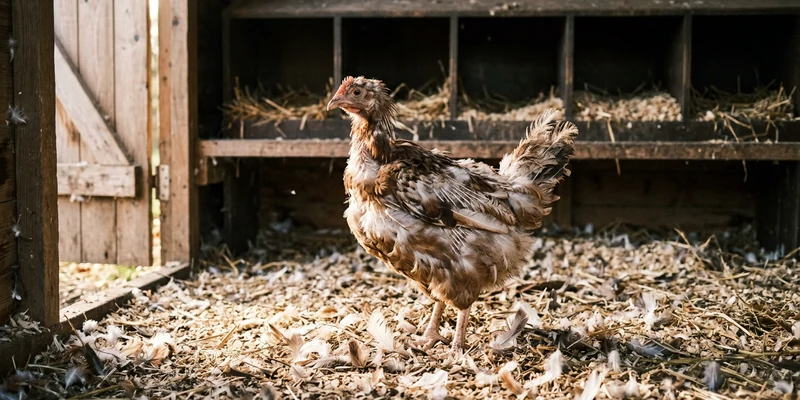
Molting is a natural process where a hen sheds and regrows her feathers, and it typically overlaps with a complete pause in egg production, since a hen’s body cannot prioritize feather regrowth and egg production at the same time. Most hens go through their first molt around a year and a half old and then molt roughly annually after that, often triggered by the shortening days of late summer and early fall. The pause can last anywhere from a few weeks to a couple of months depending on the individual bird.
There is no treatment needed for a normal molt beyond consistent, quality nutrition, since feather regrowth itself is protein intensive; molting chickens simply need time and a solid diet, not intervention. If your flock’s egg count drops in late summer or fall and you also notice feathers scattered around the run, molting is the most likely explanation, and laying typically resumes once the new feathers are in.
Daylight and the Seasonal Slowdown
Hens are sensitive to day length, and declining daylight is one of the strongest natural signals that tells a hen’s body to slow or stop laying. As a general rule of thumb, hens need roughly 14 hours of light exposure to sustain regular production, and once day length drops below roughly 12 hours, laying frequently decreases or stops. This is a normal seasonal pattern, not a sign of a problem, and it is a major reason egg counts drop noticeably every fall and winter even in a healthy flock.
Some keepers add supplemental light on a timer to maintain winter production, while others prefer to let hens follow their natural cycle and rest through the darker months. Neither approach is inherently right or wrong; it is a management choice, and either way it explains a seasonal dip without anything being medically wrong with the flock.
Age: When Egg Laying Naturally Slows
A hen’s egg production is generally highest in her first one to two years and gradually declines after that, with molts becoming more frequent and sometimes longer as she ages. This is a normal part of a hen’s lifecycle rather than a health problem, and it is worth factoring into flock planning if a steady egg supply matters to your household; our guide on how many chickens you need covers building in a buffer for exactly this kind of natural variation.
Stress, Environment, and Sudden Changes
A sudden, sharp drop in laying that does not line up with molting, age, or the calendar is often tied to stress: a predator scare even without an actual loss, the introduction of new flock members disrupting the pecking order, extreme heat or cold, a move to a new coop, or overcrowding. Chickens are creatures of routine, and disruptions to that routine can pause laying for days or weeks even when nothing is physically wrong with the bird.
If you can identify a likely stressor, such as a recent predator encounter or a change in flock composition, giving the flock time to settle is often the most effective response. Our guides on chicken predators and coop and run space both address common sources of ongoing flock stress that can affect laying beyond a one-time scare.
Nutrition, Water, and When to Call a Vet
Egg production is nutritionally demanding, and a diet lacking adequate protein, calcium, or overall balance can reduce laying or produce thin-shelled and irregular eggs even when a hen appears otherwise healthy. A consistent, complete layer feed appropriate for the flock’s age, along with reliable clean water access, addresses most nutrition-related laying issues.
What none of this covers is illness, and that distinction matters. If a drop in laying comes with other signs, lethargy, appetite changes, abnormal droppings, labored breathing, or any behavior that looks unwell rather than simply quiet, that is a situation for a veterinarian or your local agricultural extension office, not a wait-and-see approach. This guide describes common, generally normal patterns; it is not a substitute for professional evaluation when a bird actually seems sick.
Before assuming age or illness, it is worth checking that the ration still matches the flock, because a diluted layer feed shows up as a slowdown first. Our feed guide and our note on grit and oyster shell cover both halves of that.
Common Mistakes When Diagnosing a Laying Slowdown
- Assuming the worst immediately. Molting, shortening daylight, and age explain the large majority of laying pauses, and none of them require treatment.
- Ignoring the calendar. Fall and winter slowdowns are normal seasonal behavior tied to daylight, not a sign of a sick flock.
- Missing a recent stressor. A predator scare, new flock member, or move can pause laying for days or weeks without any illness involved.
- Overlooking nutrition. Inconsistent or incomplete feed is an easy cause to miss when other explanations seem more dramatic.
- Waiting too long when a bird actually looks sick. Lethargy, appetite loss, or other symptoms alongside a laying stop call for a veterinarian, not more time.
Frequently Asked Questions
Why do chickens stop laying eggs in the fall? Shortening daylight is the most common reason. Hens generally need around 14 hours of light to sustain regular laying, and production tends to drop as days get shorter.
How long does molting affect egg production? A molt-related pause commonly lasts several weeks to a couple of months, depending on the individual hen, and typically resolves on its own once feather regrowth finishes.
When do hens stop laying permanently? There is no fixed age, but production naturally declines over a hen’s lifetime after her first year or two, with molts becoming more frequent as she ages. Laying rarely returns to first-year levels in older hens.
Can stress really stop a chicken from laying eggs? Yes. Predator scares, new flock members, extreme weather, and moves can all pause laying for days or weeks even without any illness present.
Does diet affect how often chickens lay eggs? Yes, a complete layer feed with adequate protein and calcium supports consistent laying, while poor nutrition can reduce production or cause irregular, thin-shelled eggs.
When should I be concerned about a hen that stopped laying? If the pause comes with signs of illness, lethargy, appetite loss, abnormal droppings, or labored breathing, contact a veterinarian or your local extension office rather than waiting it out.
The Bottom Line
Most of the time, a quiet nest box traces back to molting, shortening daylight, age, or a recent stressor, all normal parts of keeping a flock and none of them requiring treatment. Watch the calendar and the flock’s overall behavior before assuming the worst, and reserve real concern, and a call to a veterinarian, for a laying pause that comes paired with other signs of illness.