Last updated: August 16, 2026
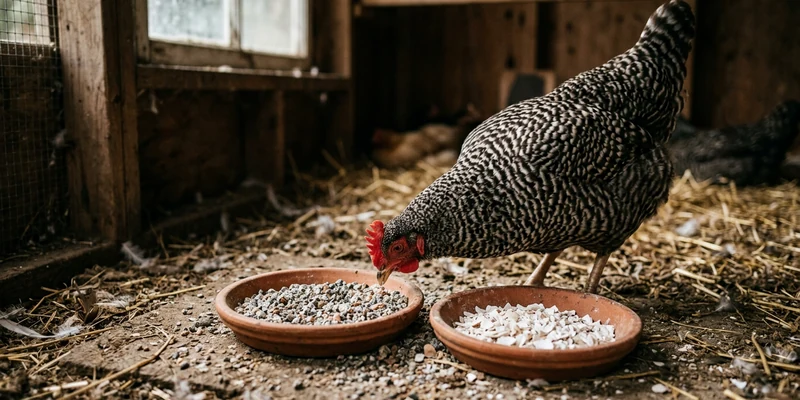
Grit and oyster shell sit next to each other in almost every feed store aisle, and new keepers understandably assume they do roughly the same job. They do not. Chicken grit helps a bird digest what it eats, while oyster shell supplies calcium for the eggs it lays, and mixing up the two, or skipping one entirely, is a common early mistake.
This guide separates the two clearly: what each one actually does, when a flock needs it, and how to offer both without overcomplicating daily care.
Quick Answer
What is the difference between chicken grit and oyster shell?
- Grit is small, hard insoluble particles that sit in a chicken’s gizzard and grind up grains and fibrous food.
- Oyster shell is a soluble calcium source that supports eggshell production in laying hens.
- Chicks and birds eating only complete feed indoors generally need less grit than birds that forage, eat scratch, or eat treats.
- Offer both free choice in their own containers rather than mixing them into feed, so each bird takes only what it needs.
Grit and Oyster Shell at a Glance
Same aisle, different job. Use this table as a quick reference for what each product does and when it applies.
| Product | Purpose | Who needs it |
|---|---|---|
| Insoluble grit | Grinds grains and fibrous scraps in the gizzard | Any bird eating scratch, treats, or forage; less needed on pellet feed alone indoors |
| Chick grit | A finer size for young birds’ smaller gizzards | Chicks once they start eating anything beyond starter crumble |
| Oyster shell | Soluble calcium for eggshell formation | Laying hens, offered separately from feed |
What Grit Actually Does
Chickens have no teeth, so digestion relies partly on the gizzard, a muscular organ that grinds food using small stones the bird has swallowed. Insoluble grit, typically crushed granite or a similar hard material, stays in the gizzard and does the actual grinding work. Without it, whole grains and fibrous treats pass through less efficiently, and a chicken can struggle to get full nutritional value from what it eats.
Birds that free range or spend time on dirt and gravel often pick up enough small stones on their own to serve as grit, which is part of why grit needs vary so much by setup. Birds kept mostly on a soft coop floor or deep litter, especially if they eat scratch or garden scraps regularly, are more likely to need grit offered deliberately.
Grit is generally sold in a couple of hardness grades, with granite based grit being one of the more commonly recommended materials because it holds up well inside the gizzard without breaking down too quickly. Softer materials wear away faster and need replacing more often, which is worth knowing if you notice a flock going through a bag of grit faster than expected.

What Oyster Shell Actually Does
Oyster shell is a soluble calcium supplement, and its job has nothing to do with digestion. A laying hen needs a substantial amount of calcium to form each eggshell, and if her diet does not supply enough, her body pulls calcium from her own bones to keep producing. Layer feed already contains added calcium, but many keepers still offer free choice oyster shell alongside it so hens in heavier lay, or hens that need a bit more, can take extra on their own.
Because oyster shell is meant only for laying hens, it should not be mixed directly into feed eaten by a mixed age flock that includes chicks or non laying pullets; offering it in a separate free choice container lets each bird self regulate. Our guide on feed by life stage covers when a pullet is ready for layer feed and oyster shell in the first place.

When Chicks Need Grit
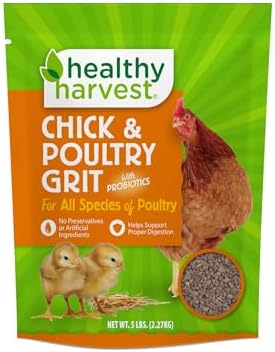
Chicks on a plain starter crumble indoors in a brooder generally do not need grit right away, since the feed is already finely ground. Once chicks start getting anything beyond that crumble, mealworm treats, bits of greens, or time outside pecking at dirt, a fine chick grit becomes useful to help them digest those additions properly. As chicks grow into pullets and eventually adult grit sized particles, the grit size offered should scale up with them.
How to Offer Both Without Overcomplicating Things
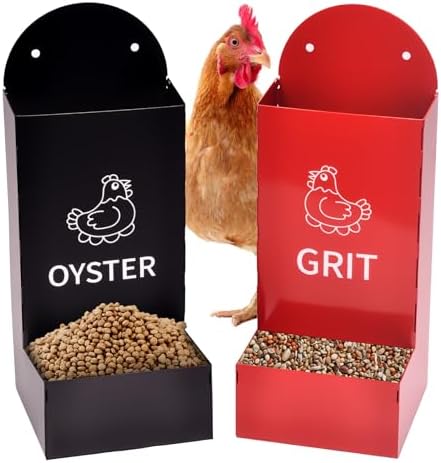
The simplest setup is two small, separate containers available at all times: one for grit, one for oyster shell, both offered free choice so birds take what they individually need. Some combination grit and calcium feeders exist that keep both in one unit with separate compartments, which can simplify things in a small coop without mixing the two products together.
Avoid the temptation to just dump grit or oyster shell into the main feed. Birds that need more calcium or more grit than others in the flock will not get the chance to self regulate if it is blended into a shared trough.
How to Tell If Your Flock Needs More
There is no simple test that tells you exactly how much grit or oyster shell a flock needs on a given week, but a few practical signals help. If birds regularly get scratch, garden scraps, or free range time, keep grit topped up and check the container often rather than assuming a single fill lasts indefinitely. If you notice thin, soft, or oddly shaped eggshells, that is a common sign a flock could use more available calcium, and increasing access to free choice oyster shell is a reasonable first step before assuming something more serious is going on.
Both products go a long way relative to how little a flock uses at once, and running out is a far more common problem than offering too much, since birds generally take only what they need when it is offered free choice rather than mixed into feed. Keeping both containers visible during routine coop chores makes it easy to top them off before they run empty, and a quick glance at each container while filling waterers is an easy habit to build into an existing routine rather than a separate task to remember.
Common Mistakes With Grit and Oyster Shell
- Mixing up the two products. Grit aids digestion; oyster shell supplies calcium. They solve different problems.
- Mixing oyster shell into a mixed age flock’s shared feed. Non laying birds do not need the extra calcium. Offer it free choice separately instead.
- Skipping grit for a flock that eats scratch or forages. Whole grains and fibrous scraps need grit to be digested efficiently.
- Using adult grit for very young chicks. A finer chick grit matches their smaller gizzard size better.
- Assuming birds on pellet feed alone never need grit. If they get any treats, scratch, or garden scraps, grit still helps.
Frequently Asked Questions
Do chickens need grit if they only eat pellets? Pellets already come pre-formed, so the need is lower, but most keepers still offer grit free choice in case birds get any scratch, treats, or forage on the side.
Can I mix grit and oyster shell together? It is better to offer them separately, since they serve different purposes and birds may need different amounts of each depending on age and laying status.
When do chicks need grit? Once they start eating anything beyond plain starter crumble, such as treats or time outside pecking at dirt, a fine chick grit becomes useful.
Does oyster shell affect egg taste or quality? Oyster shell primarily supports eggshell strength rather than the egg’s interior. Weak or thin shells are one common sign a flock could use more available calcium.
Do roosters need oyster shell? No. Oyster shell is meant for laying hens. Roosters and non laying birds do not need the extra calcium and are better served by a lower calcium feed like all flock.
Is sand the same thing as grit? Fine sand can serve a similar digestive purpose in some setups, but dedicated insoluble grit is sized and hardened specifically for the job and is the more reliable choice.
The Bottom Line
Grit and oyster shell handle two completely different jobs: grit grinds food in the gizzard, and oyster shell supplies the calcium a laying hen needs for strong eggshells. Offer both free choice in separate containers rather than mixing them into feed, adjust grit size as chicks grow, and reserve oyster shell for birds that are actually laying.
See the grit vs oyster shell chart