Last updated: August 16, 2026
Toss a handful of chicken scratch into the run and every hen in the flock comes running, which is exactly why it is so tempting to hand it out generously. Scratch grains and treats are genuinely useful tools for a keeper, for bonding with a flock, for luring birds back into the coop at dusk, for breaking up a boring winter afternoon, but they are not a substitute for a complete feed, and overdoing it shows up in a flock’s health over time.
This guide covers what chicken scratch actually is, how it differs from a complete feed, which chicken treats are worth offering, and the rule of thumb most experienced keepers use to keep treats from crowding out proper nutrition.
Quick Answer
How much chicken scratch and treats is too much?
- Scratch is a mix of cracked corn and other grains, not a complete feed, so it should never replace a flock’s main ration.
- Many keepers follow a rough rule of thumb of keeping treats and scratch to a small share of daily intake, with a complete feed making up the bulk of the diet.
- Offer scratch in the afternoon or evening rather than first thing in the morning, so hens fill up on complete feed earlier in the day.
- Pair scratch and treats with grit, since chickens need it to grind grains and fibrous scraps in their gizzard.
Scratch and Treats at a Glance
Not every crowd pleaser belongs in the same category. This table sorts the common options by what they actually offer a flock.
| Type | What it is | How to offer it |
|---|---|---|
| Scratch grains | Cracked corn and other grains, low in protein | Scatter in the run as a foraging activity, not a meal |
| Fresh vegetables | Leafy greens, squash, carrots | Offer fresh, remove uneaten portions before they spoil |
| Fruit | Berries, melon, apple flesh (no seeds) | Small amounts; natural sugars add up quickly |
| Mealworms and protein treats | Dried or live insects, high protein | Useful during molting when feather regrowth demands protein |
| Commercial treat mixes | Blended seed and grain products | Check the label for added sugar or salt before offering freely |
What Chicken Scratch Actually Is
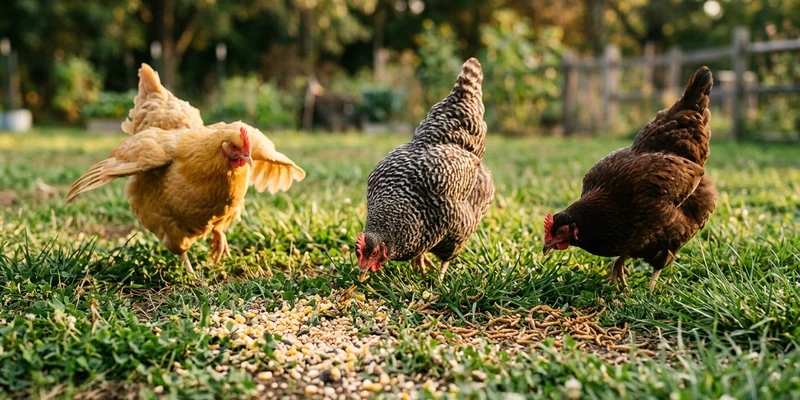
Scratch is essentially a grain mix, usually built around cracked corn along with wheat, oats, or milo, and it is deliberately not formulated as a complete feed. It carries much less protein, vitamins, and minerals than a proper layer or all flock ration, which is exactly why it works so well as a scattered, scratch-and-peck activity rather than a meal replacement. Chickens genuinely enjoy the foraging behavior scratch encourages, digging and pecking through bedding or run litter to find every last kernel.
That foraging value is a real benefit, particularly in winter when outdoor forage is scarce and boredom in a confined run can lead to feather picking. It just needs to stay framed as enrichment, not nutrition. Whether you call it scratch feed for chickens or simply scratch grains for chickens, the same rule applies either way.

Treats Worth Offering
Fresh vegetables and small amounts of fruit are generally safe, appreciated treats, and they add variety without the calorie density of grain based scratch. Leafy greens, chunks of squash, and shredded carrots tend to disappear fast, while berries and melon work well as a warm weather treat that also adds a bit of hydration.
Mealworms and other protein rich treats earn their keep during molting season, when hens are putting real energy into regrowing feathers and can use the extra protein. A commercial treat block or seed mix can also work, though it is worth checking the label, since some are higher in added sugar or salt than keepers expect from a product marketed for chickens.


The Rule of Thumb Most Keepers Follow
A commonly repeated guideline among backyard keepers is to keep treats and scratch to a small minority share of a flock’s total daily intake, with a complete feed making up the large majority. Treat that as a rough rule of thumb rather than a precise figure, since it depends on flock size, season, and how much a flock forages on its own, but the underlying principle holds: the more scratch and treats a flock eats, the less room is left for the balanced feed that actually supplies protein, vitamins, and calcium.
Feeding too many extras is one of the more common ways a flock ends up with diluted nutrition even when the complete feed itself is high quality. If egg production or feather condition seems off, cutting back on treats before assuming something else is wrong is a reasonable first step.
A simple way to keep this in check without measuring anything precisely is to watch how much complete feed is left at the end of the day. If a flock is consistently leaving feed untouched because it filled up on scratch and treats earlier, that is a practical sign to scale the extras back rather than a number pulled from a chart.
Scratch in Cold Weather
Scratch has a reputation as a good cold weather treat, and there is a real mechanism behind that: digesting grain generates some body heat, so an evening handful before roosting can help on a genuinely cold night. It is still a supplement to a complete feed and consistent water access, not a replacement for either, since digestion alone will not make up for a frozen or empty waterer on a genuinely cold night.
Garden Scraps and Herbs Worth Trying
Beyond bagged scratch and store bought treats, plenty of garden and kitchen scraps make good occasional additions. Cucumber ends, overripe zucchini, the outer leaves of lettuce or cabbage, and herbs like basil, mint, or oregano are all commonly offered by keepers and generally well received. Chickens will often show a clear preference for some scraps over others, and there is nothing wrong with letting a flock’s own taste guide what shows up in the run.
Compost worthy scraps that are past their prime for humans, slightly soft vegetables or a bit of wilted greens, are frequently still fine for chickens as long as they are not moldy or spoiled. This is a reasonable way to reduce kitchen waste, provided the same freshness rules that apply to any treat still apply here.
Common Mistakes With Scratch and Treats
- Treating scratch as a meal. It lacks the protein and nutrients of a complete feed. Scatter it as an activity, not a primary food source.
- Overdoing treats and diluting nutrition. Too many extras crowd out the balanced feed a flock actually needs for steady laying and health.
- Skipping grit when offering scratch or fibrous scraps. Chickens need grit to grind grains in the gizzard; see our guide on grit and oyster shell.
- Leaving fruit or vegetable scraps to rot in the run. Uneaten treats attract pests and can mold quickly in warm weather.
- Assuming every commercial treat product is nutritionally neutral. Check labels for added sugar or salt rather than assuming a chicken branded product is automatically fine in any amount.
Frequently Asked Questions
Is chicken scratch the same as chicken feed? No. Scratch is a grain mix, mostly cracked corn, with much less protein and fewer nutrients than a complete feed. It should supplement, not replace, a flock’s main ration.
How often should I give chickens scratch or treats? A few times a week in modest amounts works for most flocks. Daily large portions risk crowding out the balanced nutrition a complete feed provides.
Can chickens eat too many treats? Yes. Excess treats dilute the protein and calcium a flock gets from its complete feed, which can affect feather condition and egg production over time.
Do chickens need grit if they eat scratch? Yes. Chickens grind grains and fibrous scraps in their gizzard with the help of grit, so free choice grit should be available alongside scratch and treats.
Is scratch good for chickens in winter? An evening handful can help, since digesting grain generates some body heat, but it works alongside a complete feed and unfrozen water, not instead of them.
What treats should I avoid giving chickens? Skip anything salty, sugary, or on a known unsafe list. Our guide on what chickens can and can’t eat covers foods to avoid entirely.
The Bottom Line
Chicken scratch and treats are a useful tool for enrichment, bonding, and the occasional cold weather boost, but they are not a complete feed and were never meant to be one. Keep them to a modest rough share of the daily diet, offer grit alongside them, and let a proper layer or all flock feed stay the backbone of your flock’s nutrition.