Last updated: August 16, 2026
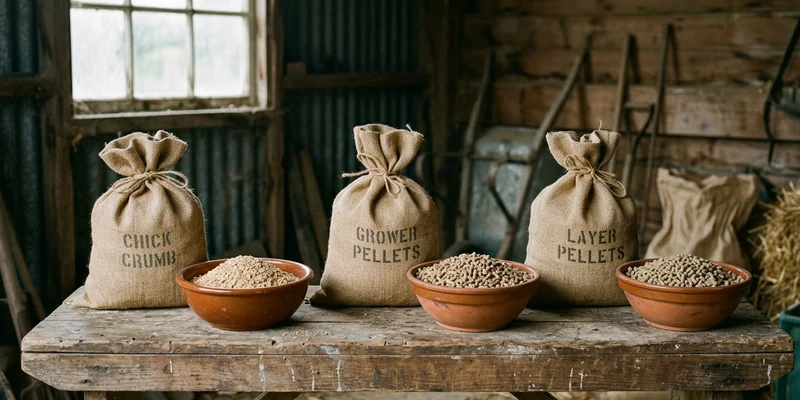
A bag of chick starter feed looks simple enough until you notice the shelf next to it stocks grower feed, and the one after that has layer feed with a completely different label. New keepers often grab whatever is closest, then wonder months later why their pullets are not laying well or why a young flock seems to be struggling on a formula that never matched their age.
The confusion is understandable, because chickens move through three distinct nutritional stages before they reach a settled adult diet, and the transition points matter more than most first time keepers expect. This guide walks through the main chicken feed types, what starter, grower, and layer feed each do, when to switch between them, and the mistakes that trip up otherwise careful keepers.
Quick Answer
When do you switch chicken feed from starter to grower to layer?
- Chick starter feed covers the first several weeks of life, when protein needs are at their highest.
- Grower feed is a bridge formula for pullets that are past the chick stage but not yet laying.
- Layer feed comes in once hens are close to their first egg, built around added calcium a growing bird does not need yet.
- Switch gradually by mixing old and new feed together for a week or two, rather than changing bags overnight.
Feed Stages at a Glance
Knowing when to switch chicken feed between these three stages is the single most useful thing to get right early on, since it prevents both slowed growth in young birds and kidney strain in hens fed calcium too soon.
Each stage lines up roughly with a chicken’s age and purpose, though exact timing varies by breed and by how quickly pullets mature toward laying.
| Stage | Rough age window | Main focus | Switch signal |
|---|---|---|---|
| Starter feed | Hatch to roughly 8 weeks | Higher protein for rapid early growth | Move to grower once chicks are feathered out |
| Grower feed | Roughly 8 to 18 weeks | Steady growth without added calcium | Move to layer as hens near their first egg |
| Layer feed | From point of lay onward | Added calcium for eggshell production | Stay on it through the laying years |
Some keepers skip a dedicated grower feed and move straight from starter to an all flock or a combined starter-grower formula, then switch to layer feed once hens begin laying. Either approach works as long as calcium stays out of the diet until birds are actually producing eggs.
Starter Feed: The First Weeks
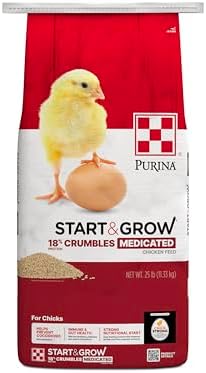
Chick starter feed is formulated with the highest protein level of the three stages, supporting the fast bone and feather growth that happens in a chick’s earliest weeks. It typically comes as a fine crumble, sized for small beaks, and most keepers offer it free choice alongside constant access to clean water from day one.
Starter feed also comes in medicated and non medicated versions. Medicated starter contains a coccidiostat that helps chicks build resistance to coccidiosis, a common intestinal parasite in young birds, while non medicated starter leaves that protection out, usually because the chicks were already vaccinated against it at the hatchery. Check with your hatchery or feed store about which version fits your chicks before buying.


Grower Feed: The Bridge Stage
Grower feed steps protein down slightly from starter levels while pullets finish maturing, and critically, it still leaves calcium out of the formula. A pullet’s kidneys are not ready to process the calcium load a laying hen needs, so feeding layer feed too early is one of the more common mistakes new keepers make during this stage.
Not every feed line offers a separate grower step. Some brands sell a combined starter-grower formula meant to cover the whole period from hatch until point of lay, which simplifies the transition to just one switch later on, from that combined feed to layer feed.
Layer Feed: Once Hens Start Laying
Layer feed is built around added calcium, since a hen actively producing eggs pulls a substantial amount of calcium from her diet to build eggshells, and will draw it from her own bones if the diet falls short. The switch generally happens when pullets are close to their first egg, often signaled by reddening combs and wattles and general nesting behavior, rather than on a fixed calendar date.
Many keepers also offer free choice oyster shell in a separate container alongside layer feed, letting hens take extra calcium as they need it rather than relying on the feed alone. Our guide on chicken grit and oyster shell covers how to set that up.

Switching Feeds Without Upsetting Digestion
A sudden feed change can upset a flock’s digestion, so the safer approach is a gradual mix: combine the old and new feed together for a week or two, slowly increasing the proportion of the new formula, rather than swapping bags overnight. This matters most when moving a mixed age flock between formulas, since younger and older birds in the same coop often need different feeds at the same time.
If you keep a mixed flock with both laying hens and younger, non laying birds, an all flock feed with a lower calcium level, paired with separate free choice oyster shell for the layers, is a common workaround that avoids overloading young birds with calcium meant for hens in full lay.
Feed and Water Access as Chicks Grow
Appetite climbs steadily as chicks grow, which is one reason free choice feeding works well from the very first day: rather than guessing at a schedule, chicks simply eat more as their bodies demand more. What matters more than tracking exact amounts is making sure feeders and waterers scale up alongside the flock, since a feeder sized for a handful of day old chicks can become a bottleneck once they are a few weeks old and eating in larger bursts.
Water access deserves just as much attention as feed during this stage. Chicks dehydrate faster than adult birds, and a waterer that runs dry even briefly can set back growth more than a short gap in feed. Check both multiple times a day in the brooder, and size up equipment before it becomes a limiting factor rather than after.
Common Mistakes When Timing Feed Switches
- Feeding layer feed to chicks or growing pullets. The added calcium can strain kidneys that are not ready for it. Wait until hens are close to point of lay.
- Switching feeds overnight. A sudden change can upset digestion. Mix old and new feed together gradually over a week or two.
- Guessing at medicated versus non medicated starter. Match the formula to your chicks’ vaccination status, and ask your hatchery or feed store if you are unsure.
- Ignoring a mixed age flock’s different needs. An all flock feed with separate oyster shell often works better than forcing one formula on birds at different life stages.
- Assuming every brand follows the same age windows. Check the label on your specific feed, since some formulas combine stages differently than others.
Frequently Asked Questions
How long do chicks stay on starter feed? Roughly until they are feathered out, often around 6 to 8 weeks, though this varies by breed and by whether your feed line combines starter and grower into one formula.
Can chicks eat layer feed? No. The added calcium in layer feed is meant for hens actively laying eggs and can strain a young, non laying bird’s kidneys over time.
Do I need a separate grower feed? Not always. Some feed brands sell a combined starter-grower formula that covers the whole period until point of lay, which is a perfectly reasonable simplification.
What is the difference between layer feed and all flock feed? Layer feed has added calcium built in. All flock feed carries less calcium and suits mixed age flocks, with oyster shell offered separately so laying hens can take what they need.
How do I know when to switch to layer feed? Watch for signs a pullet is close to her first egg, like reddening combs and wattles and nesting behavior, rather than switching on a fixed date.
Is it bad to switch feed brands suddenly? It can upset digestion. Mixing the old and new feed together for a week or two smooths the transition, whether you are switching stages or just switching brands.
The Bottom Line
Chick starter feed, grower feed, and layer feed each match a specific stage in a chicken’s development, with the biggest line to watch being calcium: keep it out of the diet until hens are close to laying, then bring it in through layer feed and free choice oyster shell. Switch gradually, match medicated starter to your chicks’ vaccination status, and a flock’s nutrition will track its actual needs instead of guesswork.