Last updated: August 16, 2026
An incubator does not hatch eggs on its own so much as it holds the conditions steady while an embryo does all the actual work. Get temperature, humidity, turning, and ventilation right and consistent, and a healthy fertile egg has a strong chance. Let any one of them drift too far for too long, and a promising batch can fail quietly, often without an obvious cause until you candle the eggs days later.
This guide walks through how to incubate chicken eggs from setup to hatch day, including the chicken egg incubation temperature and humidity ranges recommended by university poultry extension programs, rather than guesswork.
Quick Answer
How do you incubate chicken eggs?
- Chicken eggs generally take about 21 days to hatch, incubated at roughly 99.5 to 100 degrees Fahrenheit in a forced air incubator.
- Humidity typically runs around 50 to 55 percent for the first 18 days, then rises to roughly 65 to 75 percent for the final days before hatch.
- Turn eggs several times a day until the last few days, then stop turning and let humidity rise as the chicks prepare to hatch.
Incubation Conditions at a Glance
These ranges come from university poultry extension guidance and apply to a standard forced air incubator. Still air incubators run slightly warmer, generally about 1 to 2 degrees higher, since they lack a fan to circulate heat evenly.
| Stage | Days | Temperature | Humidity |
|---|---|---|---|
| Main incubation | Days 1 to 18 | Roughly 99.5 to 100 degrees F | Roughly 50 to 55 percent |
| Lockdown | Days 19 to 21 | Roughly 99 to 99.5 degrees F | Roughly 65 to 75 percent |
| Turning | Days 1 to 18 | Several times daily, or automatic | Stop turning entirely at lockdown |
If you have not chosen an incubator yet, our egg incubator guide covers what to look for in a machine before you start a hatch.
Before You Start: Setup and a Dry Run
Run the incubator empty for a full day before adding any eggs, so you can confirm the temperature and humidity hold steady and match the ranges above. Place it somewhere with a stable room temperature, away from direct sunlight, drafts, and exterior doors or vents, since ambient swings are one of the most common reasons a hatch underperforms.
Set eggs with the large end slightly up or eggs on their side if the incubator lacks angled trays, and let them sit at room temperature for a few hours before starting incubation if they came from cold storage or shipping, so they warm gradually rather than going from cold to hot immediately.
Choose eggs that are clean, normally shaped, and reasonably fresh for the best odds of a healthy hatch. Very dirty, oddly shaped, cracked, or eggs older than about a week to ten days from lay tend to hatch at noticeably lower rates than clean, fresh, well shaped eggs, even under otherwise ideal incubator conditions.

Days 1 to 18: Temperature, Humidity, and Turning
For most of the incubation period, hold temperature at roughly 99.5 to 100 degrees Fahrenheit in a forced air incubator and humidity around 50 to 55 percent. Turn eggs at least three to five times a day if turning manually, an odd number of turns so the egg does not rest on the same side every night, or rely on an automatic turner set to cycle regularly through the day.
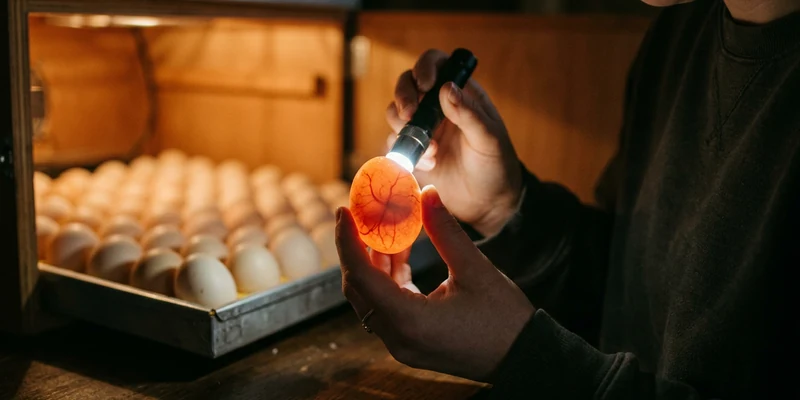
Resist opening the lid more than necessary to check on eggs, since every open cycle lets heat and humidity escape and takes time to recover. A candling light lets you check fertility and development around days 7 to 10 without needing to open the incubator for long, and again later in the process to confirm continued development.

Lockdown: Days 19 to 21
Around day 18, stop turning entirely and raise humidity to roughly 65 to 75 percent, a stage commonly called lockdown. The higher humidity softens the membrane inside the shell, which helps chicks break through without drying out or getting stuck partway. This is also the point to stop opening the incubator except when absolutely necessary, since the chicks are close to pipping and every lost degree of heat or point of humidity matters more now than earlier in the process.
Chicken eggs typically hatch around day 21, though a spread of a day or so earlier or later is common and not a cause for concern. Resist the urge to help a chick out of the shell unless it has been visibly struggling for many hours after pipping, since a chick that is not ready to hatch on its own often has an underlying issue that assisted hatching cannot fix.
Common Reasons a Hatch Falls Short
Unstable room temperature around the incubator is one of the most common causes of poor hatch rates, since even a good machine struggles to correct for repeated swings quickly. A miscalibrated thermometer or hygrometer is another frequent culprit, one that is easy to rule out early by checking your incubator’s readings against a separate, known reliable thermometer before you commit a full batch of eggs.
Infertile eggs, eggs that are too old or improperly stored before incubation, and inconsistent turning during the first 18 days also reduce hatch rates. None of these point to anything wrong with the incubator itself, which is why a dry run and a verified thermometer matter as much as the machine you choose.
After Hatch: What Chicks Need Immediately
Newly hatched chicks can stay in the incubator for several hours to fluff up and regain strength before moving to a brooder, but they need a warm, safe space with heat, water, and starter feed ready before that move happens, not scrambled together afterward. University extension guidance commonly points to a starting brooder temperature of about 95 degrees Fahrenheit in the first week, reduced by roughly 5 degrees each following week until it matches the surrounding room, a schedule most chicks need for about five to six weeks total. Our guide on heat lamps for chickens covers safe brooder heat sources for the weeks right after hatching.
If you used a broody hen rather than a machine for all or part of this process, our guide on broody hens covers what to expect from a hen managing her own clutch through to hatch day.
Common Mistakes When Incubating Chicken Eggs
- Skipping the dry run. Confirm temperature and humidity are stable for a full day before adding real eggs to the batch.
- Placing the incubator somewhere unstable. A spot near a window, vent, or exterior door undermines even a reliable machine’s ability to hold steady conditions.
- Forgetting to verify the thermometer. An uncalibrated reading can run an entire batch too hot or too cold without any obvious warning sign.
- Opening the incubator too often. Every open cycle costs heat and humidity that takes time to recover, especially costly during lockdown.
- Helping a chick hatch too soon. A chick struggling shortly after pipping usually just needs more time; assisted hatching carries real risk and should be a last resort.
Frequently Asked Questions
How long does it take to hatch a chicken egg? Chicken eggs generally hatch around day 21 of incubation, though a spread of roughly a day earlier or later is common.
What temperature should a chicken egg incubator be set to? Roughly 99.5 to 100 degrees Fahrenheit for a forced air incubator during the main incubation period, with still air models running slightly warmer.
What humidity do chicken eggs need during incubation? Around 50 to 55 percent for days 1 through 18, rising to roughly 65 to 75 percent during the final lockdown days before hatch.
Do I need to turn the eggs myself? Eggs need turning several times a day through day 18 unless your incubator has an automatic turner. Stop all turning once lockdown begins.
Why didn’t my eggs hatch? Common causes include unstable room temperature, an uncalibrated thermometer, infertile eggs, or inconsistent turning. Reviewing your setup against the ranges above is the first troubleshooting step.
Should I help a chick that is struggling to hatch? Generally no, unless it has been visibly stuck for many hours after pipping. Assisted hatching carries real risk and is best treated as a last resort.
The Bottom Line
Incubating chicken eggs comes down to holding steady conditions for 21 days: roughly 99.5 to 100 degrees Fahrenheit and 50 to 55 percent humidity through day 18, then raising humidity and stopping turning for the final lockdown stretch. A dry run, a verified thermometer, and a stable spot for the incubator matter more to hatch success than any single feature on the machine.