Last updated: August 16, 2026
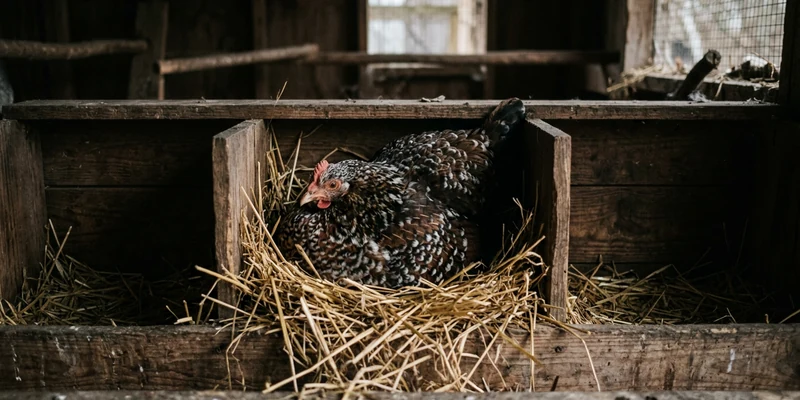
A hen that will not leave the nest box, puffs up and growls when you reach in, and has stopped laying almost overnight is not sick. She has gone broody, a hormonal shift that pushes her to sit on a clutch of eggs, fertile or not, in an attempt to hatch them. It is one of the more dramatic behavior changes a keeper will see in an otherwise calm flock.
This guide covers how to recognize a broody hen, whether to let her sit or break the behavior, and how to do either one safely.
Quick Answer
What does it mean when a hen goes broody?
- A broody hen refuses to leave the nest, sits tightly on eggs, and often puffs up or growls defensively when disturbed.
- Broodiness is a normal hormonal behavior, not an illness, though it does pause egg production for its duration.
- You can let a broody hen sit if you want chicks, or break the behavior with a cooler, more open setup if you do not.
Signs of a Broody Hen at a Glance
These are the behaviors that distinguish true broodiness from a hen simply taking her time in the nest box.
| Sign | What it looks like |
|---|---|
| Refuses to leave the nest | Stays on the nest for most of the day and night, not just while laying |
| Flattens and puffs up | Spreads out over the eggs, feathers puffed, when approached |
| Growls or pecks | Defensive sounds or pecking when you reach toward her or the nest |
| Bare patch on the chest | Plucks her own breast feathers to improve contact between her body and the eggs |
| Stops laying | Egg production pauses for the duration of the broody episode |
| Rare or no droppings from the nest | Broody hens leave the nest only briefly once a day to eat, drink, and defecate |
Why Hens Go Broody
Broodiness is driven by hormonal changes, particularly a rise in prolactin, that shift a hen’s instinct from laying toward incubating and hatching. It can be triggered by a full nest box, warm weather, or simply an individual hen’s genetics, since some breeds and individual birds go broody far more readily than others. Heritage and ornamental breeds, including Silkies and Cochins, are especially known for frequent broodiness compared with high production layer breeds bred to minimize the trait.
A broody episode is not related to illness, and a hen sitting tight on a nest with normal alertness, appetite when she does leave the nest, and no other symptoms is behaving normally rather than showing signs of a problem.
Should You Let Her Sit?
Whether to let a broody hen sit depends entirely on whether you want chicks. If you have fertile eggs, ideally from your own flock or a source you trust, and a rooster present at the time those eggs were laid, a broody hen can incubate and hatch them without an incubator, often doing a more consistent job of temperature and humidity control than a first time keeper managing a machine. Our guide on how to incubate chicken eggs covers the same general timeline and process for anyone considering a broody hatch alongside or instead of an incubator.
If you do not want chicks, either because you lack a rooster, do not want to expand the flock, or the timing is inconvenient, breaking the broody behavior is the more common path, and it protects the hen from the physical toll of weeks spent barely eating or drinking on a nest.
Setting Up a Broody Hen to Hatch
If you decide to let a hen sit, move her and the eggs to a separate, quiet space away from the rest of the flock where possible, since other hens laying in the same box can add unwanted eggs to the clutch partway through and throw off the hatch timing. A clutch of roughly six to twelve eggs is typical for a standard sized hen, sized to what she can comfortably cover with her body.
Mark the eggs you want her to sit on with a pencil so you can tell them apart from any new eggs another hen might sneak in, and check daily that she is still covering the clutch consistently. From that point, the process mirrors a machine incubation in timeline, with hatching generally happening around 21 days for chicken eggs, though the hen handles turning and humidity herself.
How to Break a Broody Hen
The most consistently effective method is moving the hen to a wire bottomed cage or crate, elevated off the ground so air circulates underneath her, with food and water available but no nesting material. The airflow against her underside interrupts the warmth cue that helps maintain the hormonal state, and most hens break within three to seven days using this approach.
Collecting eggs at least once daily so she cannot build a fresh clutch, and simply removing her from the nest box repeatedly through the day, can work for a milder case, though it is generally slower and less reliable than a dedicated broody breaker setup. Avoid any method involving prolonged cold water immersion or chilling the hen to the point of stress, since the goal is a brief, gentle interruption of the brood patch’s warmth, not a shock to the bird.
Caring for a Broody Hen Either Way
Whether she is sitting on fertile eggs or you are working to break the behavior, make sure a broody hen has access to food and water nearby, since broody hens eat and drink far less than usual and can lose noticeable condition over a multi week sit. Check her periodically for mites, since a hen sitting still in one spot for extended periods is more exposed to parasites than an actively moving bird.
If a hen appears lethargic beyond the normal broody pattern, stops eating and drinking entirely even during her brief daily breaks, or shows other signs of illness, that goes beyond typical broodiness and is worth a call to a veterinarian or your local extension office rather than assuming it will resolve on its own.
Common Mistakes With Broody Hens
- Assuming a broody hen is sick. Broodiness is a hormonal behavior, not an illness, though it does pause laying and reduce eating and drinking.
- Leaving unfertilized eggs under a broody hen indefinitely. Without fertile eggs or a rooster, she will sit for weeks without anything hatching, which is hard on her condition.
- Using cold water dunking to break broodiness. This risks chilling and stressing the hen. A wire bottomed cage with airflow is a gentler, more reliable method.
- Forgetting food and water during a broody episode. Broody hens eat and drink less on their own, so easy access nearby matters more than usual.
- Ignoring signs that go beyond normal broodiness. Complete refusal to eat or drink, or clear lethargy, warrants a veterinarian or extension office rather than a wait and see approach.
Frequently Asked Questions
What are the first signs of a broody hen? Refusing to leave the nest, flattening and puffing up when approached, growling or pecking defensively, and a sudden stop in egg laying are the most common early signs.
How long does broodiness last? Left uninterrupted, a broody episode can last several weeks. Breaking the behavior with a wire bottomed cage typically resolves it within three to seven days.
How do I break a broody hen safely? Move her to a wire bottomed, elevated cage with food and water but no nesting material for several days. Avoid cold water immersion or any method that chills or stresses her.
Can a broody hen hatch eggs without a rooster? No. A hen will sit on unfertilized eggs just as readily as fertile ones, but only fertile eggs, which require a rooster, will actually hatch.
Do all chicken breeds go broody? No. Some breeds, particularly heritage and ornamental types like Silkies and Cochins, go broody frequently, while many production layer breeds rarely or never do.
Is it normal for a broody hen to stop eating? Reduced eating and drinking is typical during a broody episode, but complete refusal or signs of lethargy beyond that pattern are worth a veterinarian’s attention.
The Bottom Line
A broody hen is behaving normally, not falling ill, when she refuses to leave the nest and puffs up defensively. Let her sit if you want chicks and have fertile eggs available, or break the behavior with a wire bottomed cage and consistent egg collection if you do not, and watch for signs that go beyond typical broodiness along the way.