Last updated: August 16, 2026
Chicken mites and lice are the most common external parasites backyard keepers run into, and the two get mixed up constantly, partly because the symptoms overlap and partly because there are several different mites that behave in different ways. Catching an infestation early, before it stresses the flock or shows up as feather loss, comes down to knowing what to actually look for and where.
This guide covers how to tell chicken mites and lice apart, what each one looks like on the bird and around the coop, and the sanitation habits extension sources point to for keeping infestations from taking hold in the first place.
Quick Answer
How can you tell if chickens have mites?
- Check the vent area and around the base of feathers for tiny moving specks or clusters of small black or reddish dots.
- Look at roosts and coop crevices after dark, since red mites hide in cracks by day and come out to feed at night.
- Watch for feather loss, a pale comb, scabby skin, or a bird reluctant to roost, which can all point to a parasite problem.
- If you confirm an infestation, a veterinarian or your local extension office can advise on an appropriate poultry-labeled treatment.
Mites vs. Lice at a Glance
Chicken lice vs mites is a common source of confusion, since both look similar at a glance but behave differently enough that identification changes how you respond.
| Parasite | Appearance | Where to look |
|---|---|---|
| Northern fowl mite | Tiny, black or brown, moves quickly | Directly on the bird, especially the vent area |
| Chicken mite (red mite) | Gray, dark brown, or reddish after feeding | Coop cracks and crevices by day, on roosts at night |
| Poultry lice | Larger, about 1/8 inch, pale yellow | Along feather shafts; look for white egg clusters at the base |
Northern Fowl Mites: The Most Common Culprit
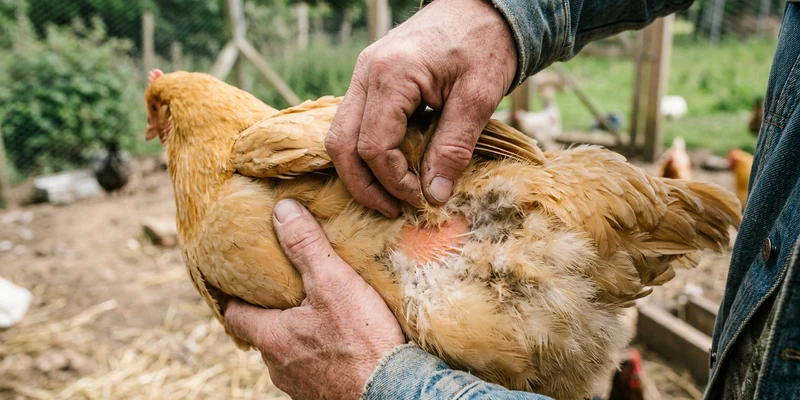
The northern fowl mite is generally described as the most common external parasite on backyard chickens, and unlike some other mites it lives directly on the bird rather than hiding in the coop structure. It appears as tiny, fast-moving black or brown specks, most easily spotted by parting feathers around the vent area, where dark clusters of mites and their fecal material tend to accumulate.
Because this mite stays on the bird around the clock, an infestation can build up quickly, and heavily affected birds may show scabbing, feather loss, and a generally unkempt look around the vent. Checking a few birds by hand periodically, especially ones that seem to be preening excessively, is the most reliable way to catch it early.
Chicken Mites: The Ones That Hide in the Coop
Chicken mites, sometimes called red mites or roost mites, behave very differently from northern fowl mites. During the day they retreat into cracks and crevices in roosts, walls, and nest boxes, then emerge at night to feed on roosting birds before hiding again by morning. This habit makes them easy to miss during a daytime inspection, since a coop can look clean while still harboring a significant population.
A flashlight check of roosts and joints after dark, or examining cracks and roost undersides closely during the day, is the more reliable way to catch these mites, since the tell is often gray, dark brown, or reddish specks visible along seams and roost hardware rather than on the birds themselves during daylight.
Poultry Lice: Similar Symptoms, Different Parasite
Poultry lice are larger than most mites, roughly 1/8 inch, pale yellow, and unlike chicken mites they spend their entire life cycle on the bird. The clearest identifying sign is not the adult lice themselves but the white, cement-like egg clusters, sometimes called nits, found at the base of feathers, especially around the vent and under the wings.
Poultry lice are species-specific to birds, so they will not transfer to people or other household pets the way some parasites can. Feather damage, restlessness, and a bird that spends noticeably more time preening than usual are common signs worth investigating further.
Scaly Leg Mites: A Different Kind of Mite Entirely
Scaly leg mites are a distinct parasite from the ones covered above, and they behave very differently. Rather than living in feathers or coop cracks, they burrow under the scales on a chicken’s legs and feet, causing the scales to lift, thicken, and take on a rough, crusty appearance over time rather than lying flat and smooth.
Because the damage builds slowly, scaly leg mites are often noticed later than feather or vent-area parasites, sometimes only once the legs look visibly abnormal. Checking legs and feet during a routine bird check up, alongside the vent and feather areas, catches this earlier, and a veterinarian or extension office can advise on appropriate care once it is confirmed.
Prevention: Where Coop Hygiene Actually Helps
Regular coop cleaning, dry bedding, and clearing clutter where mites can hide all reduce the conditions both parasites rely on, even though prevention cannot guarantee an infestation never happens. Many keepers offer a dust bath area with fine dry dirt, sand, or wood ash, since dust bathing is natural chicken behavior that can help birds manage light parasite loads on their own.

Some keepers also add diatomaceous earth to dust bath material or nest boxes as part of a broader routine, though its effectiveness is considered inconsistent, particularly in humid conditions, and it works as a physical desiccant rather than a fast treatment. New birds should always be checked closely and kept separate from the main flock for a period before joining it, since introducing an infested bird is one of the most common ways mites and lice enter a previously clean coop.

Common Mistakes When Dealing With Mites and Lice
- Only checking birds during the day for red mites. These mites hide in coop cracks by day and are far easier to catch with a nighttime flashlight check.
- Mistaking lice eggs for dandruff or dirt. White clusters at the base of feathers are a strong signal worth a closer look, not something to brush off.
- Skipping quarantine for new birds. Introducing an infested bird directly into the flock is one of the fastest ways parasites spread.
- Relying on dust baths alone once an infestation is confirmed. Dust bathing supports prevention, but an active infestation generally needs guidance from a veterinarian or extension office.
- Treating the birds but not the coop. Red mites in particular live in the structure itself, so cleaning cracks and roosts matters as much as checking the birds.
Frequently Asked Questions
How do you tell if chickens have mites? Part the feathers around the vent area and look for tiny moving specks or dark clusters of dots. For red mites, check roosts and coop crevices with a flashlight after dark, since they hide during the day.
What is the difference between chicken lice and mites? Lice are larger, pale yellow, and identified mainly by white egg clusters at the base of feathers. Mites are smaller and either live directly on the bird, like the northern fowl mite, or hide in coop cracks by day, like the red mite.
Can chicken mites or lice spread to humans? Poultry lice are species-specific to birds and will not infest people. Some mites can bite people in a heavily infested environment, but they cannot complete their life cycle on a human host.
Does diatomaceous earth get rid of chicken mites? It can play a supporting role as a physical desiccant in dust baths, but results are inconsistent, especially in humid conditions, and it is not considered a reliable stand-alone treatment for an active infestation.
What does a chicken with mites or lice look like? Common signs include feather loss, a pale comb, scabby skin around the vent, excessive preening, and reluctance to settle on the roost at night if red mites are active in the coop.
How common are mites on chickens and lice on chickens? Both are among the most frequently reported parasite problems in backyard flocks. Neither is a sign of poor keeping on its own, since even well-managed coops can pick up an infestation from wild birds, rodents, or a newly introduced bird.
Should I call a veterinarian for a mite or lice infestation? If you confirm a significant infestation or the flock shows signs of stress beyond mild parasite presence, a veterinarian or your local extension office can recommend an appropriate poultry-labeled treatment and correct application.
The Bottom Line
Chicken mites and lice are common but manageable when you know what each one looks like and where to check. Northern fowl mites live on the bird, red mites hide in the coop by day, and lice show themselves through white egg clusters at the feather base. Regular inspection, dry bedding, and quarantining new birds go a long way toward keeping infestations from taking hold.