Last updated: August 16, 2026
A predator proof chicken coop is rarely the result of one big decision. It is the sum of a dozen small ones: the mesh size on a vent, the latch on a door, whether the fence line stops at ground level or keeps going a foot underground. Most predator losses trace back to exactly one of these details being skipped, not to some unstoppable animal that no coop could have kept out.
This guide is a building checklist, not a product list: what to check on a coop and run you are constructing, buying, or retrofitting, covering mesh, latches, the ground, and the roof, in the order that actually matters most.
Quick Answer
How do you predator proof a chicken coop and run?
- Replace chicken wire with hardware cloth, generally half inch mesh, on every window, vent, and run panel a predator could reach.
- Address the ground with a buried edge or apron of wire, since digging predators go under a fence that stops at the surface.
- Upgrade latches to something a raccoon’s dexterous paws cannot work open, and close the coop every evening without exception.
- Cover the run overhead if hawks or owls are a known risk in your area, since ground fencing does nothing against an aerial approach.
Predator-Proofing Checklist
Work through this list in order. The items near the top cause the most losses when skipped, so start there before worrying about lower-priority details.
| Area | Common failure | What actually works |
|---|---|---|
| Mesh on openings | Chicken wire pulled apart or reached through | Half inch hardware cloth, quarter inch at pop doors and small gaps |
| Ground level | Digging predators go under the fence line | Buried edge 6 to 12 inches deep, or a surface apron extending 12 to 18 inches out |
| Door and gate latches | Simple hooks worked open by raccoon paws | Carabiner-style or spring-loaded latches, or a second locking point |
| Overhead cover | Hawks and owls attack from above unopposed | Netting or a solid roof over any part of the run without a ceiling |
| Coop closure routine | Doors left open past dusk, when most predators are active | A consistent closing time, or an automatic door as a backup |
Start With the Mesh, Not the Fence Line
Standard chicken wire is built to keep chickens contained, not to keep predators out, and it is the single most commonly cited weak point in loss reports. A raccoon can reach through the hexagonal gaps with its front paws, and a determined dog or coyote can tear worn wire apart outright. Hardware cloth, generally half inch mesh in a sturdy gauge, is the standard upgrade for every window, vent, and run panel, with a tighter quarter inch mesh at pop doors and any gap under about two inches, where mice and snakes could otherwise slip through. Our guide comparing hardware cloth and chicken wire covers mesh size and gauge in more detail.
Check every seam and staple, not just the panel itself. A predator working at a coop repeatedly over several nights will find a loose corner or a gap where two panels meet before it tries to tear through solid mesh, so fastening quality matters as much as the material.
The Ground Is Where Most Plans Fall Short
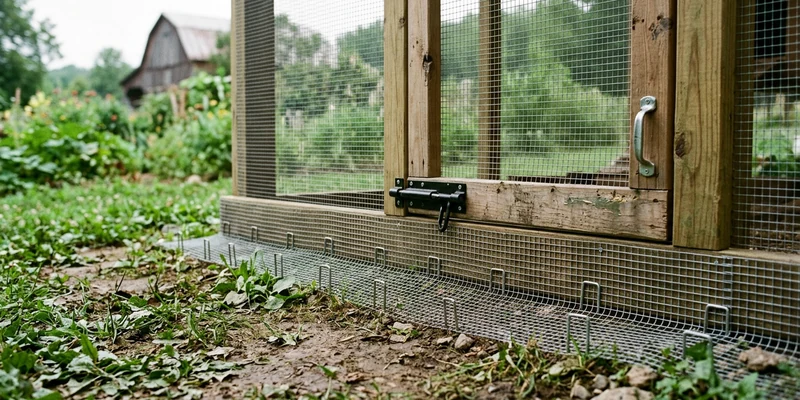
A wall of hardware cloth accomplishes nothing if a predator can simply dig underneath it. Foxes, dogs, and several other digging predators will go under a fence that stops at the surface rather than testing the mesh itself. Two proven approaches address this: burying the base of the fence roughly 6 to 12 inches into the ground, or laying a flat apron of hardware cloth extending 12 to 18 inches outward from the fence line and covering it with soil or gravel so it stays in place.
The apron method generally involves less digging labor and works on the same principle: an animal that hits solid wire while trying to dig down gives up before reaching the coop. In sandy or loose soil, lean toward the longer end of that range for extra margin.
Latches, Locks, and the Coop’s Weakest Point
A simple hook-and-eye latch is within reach of a raccoon’s dexterous paws, and it is a recurring failure point in owner accounts of predator break-ins. Spring-loaded latches, carabiner clips, or a second independent locking point are all harder for wildlife to defeat than a single hook.
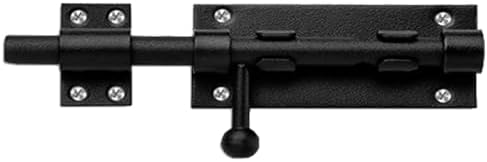
Consistency matters as much as hardware. A predator-proof latch does nothing if the door is left open past dusk, which is when many predators become active. Keepers who struggle to close the coop reliably every evening often find an automatic coop door worth the investment; our automatic chicken coop door guide covers options built for exactly this gap in the routine.
Don’t Forget the Roof
Ground-level fencing, however well built, does nothing against a hawk or owl attacking from above, and an uncovered run is a real risk in areas with active raptor populations. A solid roof over at least part of the run gives birds somewhere to retreat, while netting or a full span of hardware cloth over an open run closes the gap without blocking light and airflow the way a solid cover would.
An electric fence for chickens, sometimes sold as electric poultry netting, is another layer some keepers add around a run’s perimeter, particularly in areas with heavy ground predator pressure, though it works best as a supplement to solid mesh and a buried edge rather than a replacement for either. A predator proof chicken run built this way, mesh, buried edge, and an electric layer if needed, addresses ground threats from several angles at once.
Predator-Proofing an Existing Coop, Not Just a New Build
Retrofitting an older coop follows the same checklist, just in a different order of urgency. Start with whatever mesh is currently thinnest or most visibly worn, since that is the most likely entry point, then check the ground-level seam where the coop or run meets the yard. Latches are usually the fastest and cheapest upgrade, so there is little reason to leave a weak hook latch in place while working through bigger projects like re-meshing a run.
Our guide to chicken coop plans covers predator-proofing details worth checking against any plan before you build or retrofit, whether the coop is new or years old.
Common Mistakes When Predator-Proofing
- Leaving chicken wire on windows or run panels. It contains birds but does little to stop a predator that wants in.
- Skipping the ground-level barrier. Digging predators exploit any gap where the fence meets the yard.
- Using a simple hook latch. Raccoons can work these open with their paws. Use a spring-loaded or carabiner-style latch instead.
- Leaving the run uncovered. Hawks and owls attack from above, which ground fencing alone cannot address.
- Inconsistent closing times. A secure coop left open past dusk offers no protection during the hours predators are most active.
Frequently Asked Questions
What is the best mesh for a predator proof chicken coop? Half inch hardware cloth is the common standard for general protection, with a quarter inch mesh recommended at pop doors and any gap under about two inches.
How deep should I bury wire around a chicken run? A common range is 6 to 12 inches when burying the edge directly, or a flat apron extending 12 to 18 inches outward as an alternative to deep digging.
Do I need an automatic coop door for predator-proofing? It is not required, but it removes the risk of the door being left open past dusk, which is a common and preventable cause of predator losses.
Does a predator proof coop need a roof over the run? If hawks, owls, or other aerial predators are active in your area, yes. Ground-level fencing alone does nothing against an attack from above.
Is electric fencing necessary for predator-proofing? It is a useful supplement in areas with heavy ground predator pressure, but it works best alongside solid mesh and a buried edge, not as a replacement for either.
What predators are the hardest to keep out? Raccoons and dogs are common problem predators due to their strength and dexterity. Our guide on chicken predators covers how to identify which animal is causing a specific type of loss.
The Bottom Line
A predator proof chicken coop comes down to a handful of details done consistently: hardware cloth instead of chicken wire, a buried edge or apron at ground level, sturdy latches, and a covered run where aerial predators are a risk. Work through the checklist in order, since the mesh and the ground cause the most losses when they get skipped.