Last updated: August 16, 2026
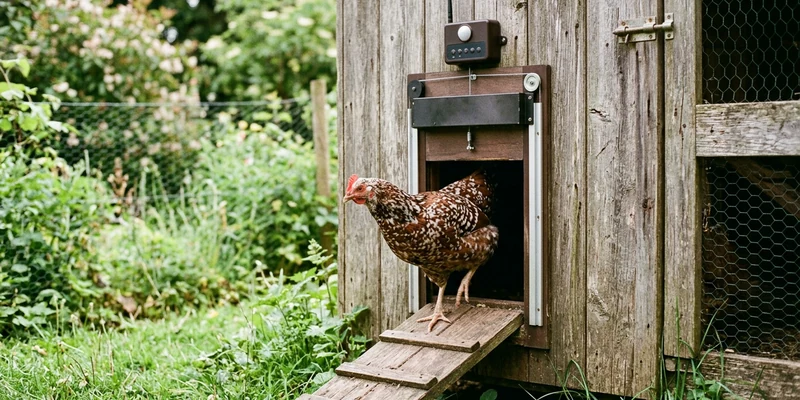
An automatic chicken coop door solves one of the most predictable failure points in backyard keeping: the evening you get home late, or the morning you sleep in, and a hand operated door leaves your flock exposed to whatever hunts at dawn and dusk. A door that opens and closes itself on a schedule or a light sensor removes that single point of human error.
These doors range from simple timer kits added to an existing coop to fully integrated units sold with the coop itself. This guide covers what actually matters when choosing one, since a door that jams, runs out of power, or does not seal tightly defeats the entire purpose.
This article contains affiliate links. If you buy through them, we may earn a commission at no extra cost to you. Learn more.
Quick Answer
Which automatic chicken coop door should you buy?
- For most keepers, a light sensor automatic door with a manual override and a battery backup covers dawn and dusk reliably without needing to reset a timer every season.
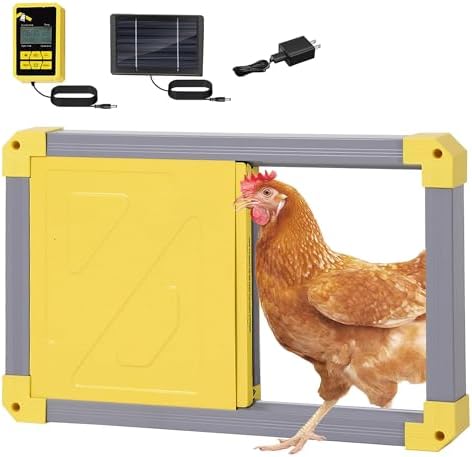
- If your coop sits somewhere without easy access to power, a solar chicken coop door removes the need for an outlet or extension cord entirely.
- Whatever you buy, match the door opening and frame to your existing coop, since retrofitting an oversized unit onto a small opening rarely goes cleanly.
What to Check Before You Buy an Automatic Door
Every row below can be checked on the product listing before you buy. Getting these right is the difference between a door that quietly does its job for years and one you end up propping open by hand.
| What to check | Why it matters | What to look for |
|---|---|---|
| Trigger type | Determines how the door decides when to open and close | A light sensor for dawn and dusk timing, or a programmable timer for a fixed schedule |
| Power source | A dead battery or power outage means a door stuck open or shut | Battery power with a low battery warning, a solar panel, or a wired option, matched to your coop’s setup |
| Manual override | You will occasionally need to open or close the door yourself | A physical switch or app control that bypasses the automatic schedule |
| Door and frame material | Needs to seal against drafts and resist a determined predator | A sturdy frame with a door that closes flush against the opening, not a loose fit |
| Motor and mechanism | Jams are the most common complaint with lower quality units | A drop bar or roll up mechanism rated for the door’s weight, with a stated obstruction safety feature |
| Compatibility with your coop | Retrofitting the wrong size frame creates gaps predators exploit | Dimensions that match your existing opening, or a unit sold as part of a full coop |
An automatic door only helps if the rest of the coop is equally secure. Our large chicken coop guide covers overall predator resistant construction beyond the door itself.
Light Sensor, Timer, and Solar Options
Light sensor doors read ambient light levels and open or close automatically as it gets brighter or darker, which means the schedule adjusts itself through the seasons without you resetting anything. Timer based doors instead open and close at fixed clock times you set, which is predictable but needs manual adjustment as sunrise and sunset shift across the year.
Solar powered doors pair a small panel with a battery, letting the unit run without a nearby outlet or a buried extension cord. This matters most for coops set back from the house or without easy electrical access. Wired options exist too, and tend to be the most consistent power source where running a cord is realistic.
Why the Mechanism Matters More Than the App
Plenty of automatic doors advertise app control and smart features, but the part that actually determines whether your flock stays safe is the physical mechanism: does the door close fully and seal against the frame, and does it have a reliable way to detect and stop if something is in the way. A drop bar door that closes on a half emerged bird is a real risk with lower quality units, so a stated obstruction safety feature is worth checking for specifically.
Owner reviews consistently mention the same two failure points across brands: batteries that drain faster than expected in cold weather, and frames that do not seal tightly enough to stop a determined raccoon from working an edge open. Both are worth checking in reviews before you buy, not after installation.
Our Top Picks at a Glance
How we chose: we compared widely available automatic coop doors on trigger reliability, power source flexibility, mechanism safety features, and how consistently owners report jam free operation over a season. Selections lean on manufacturer specifications and recurring themes in customer reviews rather than any hands-on trial of our own.
🏆 Best Overall
A light sensor automatic door with a manual override switch and a battery backup, built to run reliably through changing daylight hours without seasonal resetting.

☀️ Upgrade Pick
A solar powered automatic door that pairs a panel and battery, ideal for coops set away from a power outlet or extension cord run.

💛 Best Value
A straightforward timer based automatic door kit that covers the essentials for keepers comfortable adjusting the schedule a few times a year.

Picks by Situation: Larger Coops and Predator Pressure
Two situations call for extra attention beyond the standard retrofit door: coops with a wide opening built for a larger flock, and properties with heavy predator pressure.
🏠 Best for Large Coops
A heavier duty automatic door sized for a wider opening, built for larger walk-in style coops rather than a small pop door.

🦝 Best for Predator Pressure
An automatic door with a sturdier aluminum frame and a tighter seal, the configuration worth the extra cost if raccoons or other persistent predators are a known problem on your property.
Installing and Testing an Automatic Door
Test the door manually several times before trusting it to the automatic schedule, checking that it opens and closes fully, seals against the frame without gaps, and that any obstruction safety feature actually stops the mechanism when you test it with something in the doorway. Run it on a manual or supervised cycle for a few evenings before leaving it fully unattended overnight.
Once the door is dialed in, the rest of predator proofing follows the same logic: no gaps, no loose hardware, and a coop your flock cannot be reached in even if something gets into the run. Our large chicken coop guide covers construction details that complement a good automatic door.
Common Mistakes to Avoid
- Trusting the automatic schedule before testing it manually. Run several supervised cycles first to confirm the door seals and closes fully.
- Ignoring battery performance in cold weather. Batteries drain faster in low temperatures. Check the manufacturer’s cold weather guidance and keep spares on hand.
- Installing a door that does not match your opening size. A gap around a mismatched frame is exactly what a predator will find and exploit.
- Skipping the obstruction safety feature check. A door that closes regardless of what is in the way is a real risk to a bird still on its way in.
- Treating the door as your only predator defense. A secure door on an otherwise weak coop still leaves the run and other access points exposed.
Where to Go From Here
An automatic door is one piece of a secure setup. Pair it with a coop built for your flock size using our large chicken coop guide, and keep the rest of daily care simple with our chicken waterer guide and chicken feed guide.
Frequently Asked Questions
Are automatic chicken coop doors reliable? Well built units with a manual override and a stated obstruction safety feature perform reliably for most keepers, based on recurring owner feedback. Reliability drops with lower quality mechanisms and frames that do not seal tightly, so check reviews for jam complaints before buying.
Do automatic doors run on batteries or need power? Both options exist. Battery powered and solar powered doors work without a nearby outlet, while wired options need access to power but tend to run more consistently.
Can an automatic door close on a chicken? Quality units include an obstruction safety feature that stops the door if something is in the way. Always test this feature manually after installation rather than assuming it works as advertised.
Will an automatic door fit my existing coop? Only if the frame dimensions match your current opening or you are willing to modify the opening. Check the listed dimensions carefully, since a mismatched retrofit is the most common installation complaint.
Do I still need to lock the coop by hand? No, that is the point of an automatic door, though a manual override is worth having for the occasional evening you want to check on the flock yourself or the schedule needs a one time adjustment.
The Bottom Line
The best automatic chicken coop door for most keepers is a light sensor model with a manual override and reliable battery backup, or a solar version if power access is limited. Match the frame to your coop opening, test the obstruction safety feature by hand, and treat the door as one part of a fully predator resistant setup rather than the whole solution.