Last updated: August 16, 2026
A box of straight run chicks looks like a uniform ball of fluff for the first several weeks, and that uncertainty is exactly the problem for keepers whose city or neighborhood does not allow roosters. Unlike commercial hatcheries, which use specialized methods to sex day old chicks with high accuracy, backyard keepers are mostly left waiting for physical development to reveal the answer.
This guide covers how to tell if a chicken is male or female, the reliable ways of sexing chickens and how to tell rooster from hen once feathers and combs develop, and why some early guesses turn out wrong. If you have searched how to sex chickens and found conflicting advice, the signs below, used together rather than alone, are the most dependable approach available without hatchery equipment.
Quick Answer
How can you tell if a chicken is male or female?
- The most reliable home signs, comb and wattle size, pointed hackle and saddle feathers, and crowing, do not show up clearly until roughly 6 to 16 weeks old depending on the trait and breed.
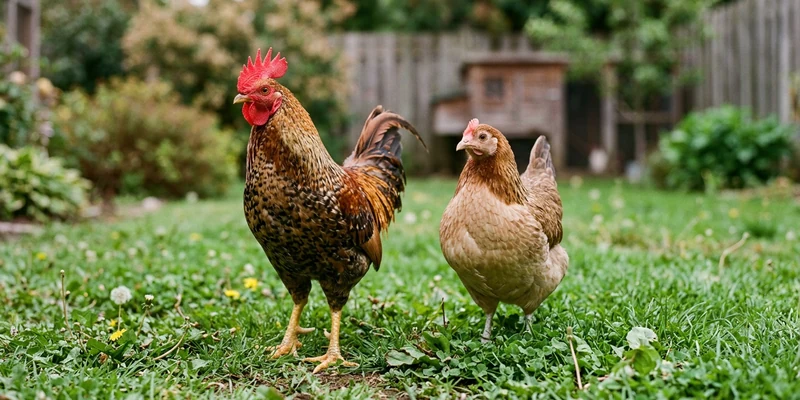
- Roosters generally develop larger, redder combs earlier, pointed neck and rump feathers, and eventually crow, while pullets stay smaller in the comb and develop rounder feathers.
- No single sign is foolproof at very young ages, so combining several signs over several weeks gives a far more reliable read than any one trait alone.
Signs of Rooster or Hen at a Glance
These are the most commonly used physical and behavioral signs, roughly in the order they tend to become reliable as a chicken matures.
| Sign | Typical age it shows | Rooster vs hen |
|---|---|---|
| Comb and wattle growth | Roughly 3 to 6 weeks | Roosters usually develop larger, redder combs and wattles earlier than pullets of the same age |
| Leg thickness and posture | Roughly 4 to 8 weeks | Cockerels often have thicker legs and a more upright stance |
| Hackle and saddle feathers | Roughly 8 to 12 weeks | Roosters grow pointed, narrow neck and lower back feathers; hens keep rounded feather tips |
| Tail feather shape | Roughly 8 to 16 weeks | Cockerels develop longer, curved sickle feathers; pullet tails stay shorter and straighter |
| Crowing | Roughly 8 to 20 weeks | A definitive sign once it happens, though timing varies widely between individual birds |
Why Backyard Sexing Is a Waiting Game
Commercial hatcheries use techniques like vent sexing, examining a day old chick’s vent for subtle anatomical differences, that require significant training and are not practical for a home flock to attempt reliably or safely. Feather sexing, which relies on breeds developed specifically so male and female chicks feather out at different rates, only works on those specific hybrid crosses, not on straight run chicks of standard breeds.
For most backyard keepers with standard breed chicks, that leaves watching physical and behavioral development over the following weeks as the practical option, which is why sexing chicks accurately usually takes patience rather than a single quick check.
Comb, Wattles, and Early Development
One of the earliest and most useful signs is comb and wattle development. Cockerels, young male chickens, typically show a noticeably larger, redder comb and wattles earlier than pullets of the same age and breed, sometimes visible by three to six weeks old. This difference tends to become clearer over the following weeks rather than appearing overnight, so comparing chicks from the same hatch against each other, rather than judging a single bird in isolation, makes the pattern easier to spot.
Leg thickness and a more upright, confident stance often develop alongside comb growth in young males, though this sign is less consistent across breeds than comb development and works best combined with other signs rather than alone.
Feather Shape: The Most Reliable Home Sign
As chickens approach two to four months old, feather shape becomes one of the more dependable signs available to a home flock keeper. Roosters develop pointed, narrow hackle feathers around the neck and saddle feathers near the base of the tail, along with longer, curved sickle feathers in the tail itself. Hens keep rounded feather tips throughout these same areas, without the pointed or elongated shapes males develop.
This sign is generally considered more reliable than comb size alone, since feather shape is a clearer anatomical difference that develops consistently across most standard breeds, though the exact timing still varies by breed and individual bird.
Crowing and Behavior
Crowing is the most definitive sign once it happens, but timing varies enormously between individual birds, from as early as eight weeks in some cockerels to several months in others. A bird that has not crowed by a certain age is not necessarily a hen, since some roosters are simply late developers vocally even when their physical traits already point clearly toward male.
Behavioral signs like mounting other chicks or increased aggression can appear in young cockerels but are less reliable than physical traits, since pecking order behavior in mixed groups can produce similar dynamics regardless of sex. Lean on the physical signs above as your primary evidence, treating behavior as a supporting clue at most.
Planning Ahead for an Unwanted Rooster
Because sexing straight run chicks takes weeks of watching rather than a single check, it is worth deciding in advance what you will do if a chick turns out male and your situation does not allow or want a rooster. Many local ordinances restrict or ban roosters specifically, even where hens are permitted, due to noise, so check your city or county rules before you commit to raising straight run chicks if that is a concern.
Rehoming through local poultry groups, swaps, or keepers specifically looking for roosters is the most common path for an unwanted cockerel. Planning this out before you are certain of a chick’s sex avoids a rushed decision later.
If you specifically want to avoid this uncertainty on a future hatch, ordering sexed pullets from a hatchery, where breed genetics or trained sexing methods allow it, removes most of the guesswork, though it is not an option for every breed or every source of chicks.
Having somewhere to put a cockerel for a few weeks makes that decision much less rushed, even if he eventually moves on. Our coop guide covers the smaller structures that work as temporary separate housing.
Common Mistakes When Sexing Chicks
- Judging sex from a single sign too early. Comb size alone at two or three weeks is unreliable; combine multiple signs over several weeks for a more accurate read.
- Assuming a quiet bird is definitely a hen. Crowing timing varies widely, and a late crower is not the same as a hen.
- Applying feather sexing rules to standard breed chicks. That method only works on specific hybrid crosses bred for it, not on typical straight run chicks.
- Waiting too long to check local rooster rules. Many areas restrict roosters specifically, so confirm this before committing to straight run chicks if that matters to your situation.
- Overweighting behavior over physical traits. Pecking order dynamics can look similar across sexes; feather shape and comb development are more dependable signs.
Frequently Asked Questions
How can you tell if a chicken is male or female? Comb and wattle size, hackle and saddle feather shape, tail feather length, and eventually crowing are the main signs, most becoming clear between roughly 6 and 16 weeks old.
What is the earliest age you can sex a chick? Comb and wattle differences can appear as early as three to six weeks in some breeds, but they become far more reliable by eight weeks or later, especially when combined with feather shape.
Can you tell a rooster from a hen without waiting for crowing? Yes. Pointed hackle and saddle feathers and a larger, redder comb typically appear well before crowing starts and are considered more reliable early signs.
Do all breeds show these signs at the same age? No. Timing varies by breed, with some breeds showing comb and feather differences earlier or later than others, so treat the ranges above as general guidance rather than a fixed schedule.
Why do commercial hatcheries sex chicks accurately at hatch? They use trained techniques like vent sexing or, for certain hybrid crosses, feather sexing based on breed specific genetics, methods that are not practical or reliable for a home flock to attempt.
What should I do if my pullet turns out to be a rooster? Check local ordinances first, since many areas restrict roosters specifically. Rehoming through local poultry groups or swaps is the most common option if you cannot keep him.
The Bottom Line
Sexing backyard chicks is mostly a matter of patience: comb and wattle growth, feather shape, and eventually crowing all reveal a chick’s sex over the first several months, with feather shape generally considered the most reliable single sign. No one trait is foolproof on its own, especially at very young ages, so weigh several signs together rather than deciding from a single check.