Last updated: August 16, 2026
Checking the nest boxes every day for weeks before a young hen’s first egg is a rite of passage for most new keepers. The wait can feel long, especially once a pullet starts showing the physical signs that laying is close, but the timeline is fairly predictable once you know what drives it.
This guide covers when hens typically start laying, the signs that the first egg is near, and what to have ready so the transition from pullet to layer goes smoothly.
Quick Answer
When do chickens start laying eggs?
- Most pullets start laying between about 16 and 24 weeks old, with many common breeds landing around 18 to 22 weeks.
- Production breeds tend to start earlier, while larger dual purpose and heritage breeds often take a few extra weeks.
- Daylight length, nutrition, and hatch timing all shift the exact week, so a bird starting a little earlier or later than a breed average is not unusual.
Typical Age at First Egg by Breed Type
These are general ranges, not guarantees for any individual bird. Two pullets of the same breed hatched a week apart can still start laying weeks apart from each other.
| Breed type | Typical age at first egg | Notes |
|---|---|---|
| Production and hybrid layers | Roughly 16 to 20 weeks | Bred specifically for early, consistent laying |
| Common dual purpose breeds | Roughly 18 to 22 weeks | Rhode Island Red, Australorp, and similar breeds |
| Larger heritage or slow growing breeds | Roughly 24 to 28 weeks | Bigger bodied breeds mature and lay later |
| Bantam and ornamental breeds | Roughly 20 to 24 weeks | Varies widely by specific breed |
Signs a Pullet Is Close to Laying
Before the first egg shows up, a pullet’s body goes through a handful of visible changes that tend to appear in the last couple of weeks before laying starts. Her comb and wattles redden and enlarge, she may start squatting when you approach or reach toward her, back flat and wings slightly out, and she will often begin investigating nest boxes, sitting in them, or rearranging bedding well before she actually uses one.
Appetite typically increases too, since egg production takes real nutritional resources. If you notice several of these signs together, the first egg is usually a matter of days to a couple of weeks away rather than months.
What Drives the Timing: Light, Breed, and Nutrition
Daylight length is one of the strongest environmental triggers for the onset of laying, since a hen’s reproductive system responds to roughly 12 to 14 hours of light as a cue that conditions favor laying. A pullet that reaches maturity heading into shortening fall daylight can start noticeably later than one maturing in spring, even within the same breed.
Genetics set the baseline, with production breeds bred over generations to mature and lay earlier than heavier, slower growing breeds. Nutrition matters as well. Switching to a complete layer feed with adequate calcium around 16 to 18 weeks, timed to about a month before the expected start of lay, supports a smoother transition than staying on a grower ration too long.
Why Hatch Date Matters as Much as Breed
Two pullets of the same breed can reach a very different age at first egg purely because of when they hatched. A pullet hatched in early spring matures into lengthening daylight through summer, which tends to line up well with her body reaching laying age around the same time daylight naturally supports it. A pullet hatched in late summer or fall matures into shortening daylight instead, and her body may delay laying until days lengthen again, sometimes pushing her first egg out well past the breed average.
This is a normal, well documented pattern rather than a flaw in the bird, and it is worth factoring in if you are ordering chicks or hatching eggs with a target laying date in mind. Ordering or hatching in early spring generally gets you to a fall or winter start of lay faster than a fall hatch does.
Getting the Coop Ready Before the First Egg
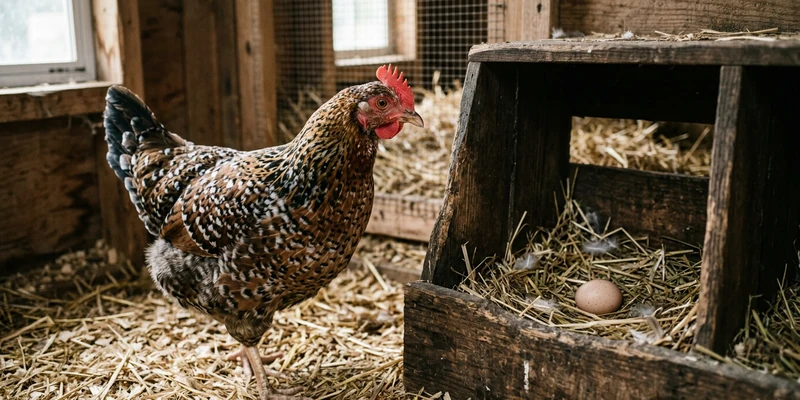
Nest boxes should be in place and appealing before pullets start laying, not after, since a hen that finds no obvious nest option may choose a corner of the coop or a spot in the run instead, a habit that is far easier to prevent than to break. A general rule of thumb is one nest box for every three to four hens, lined with clean, soft bedding in a dim, quiet part of the coop.
Roll away nest boxes, which let an egg roll gently into a protected collection area after it is laid, can help cut down on egg eating and breakage in a flock that includes curious pullets still learning nest box habits.

If you are still finalizing your setup at this stage, our guide on how much space chickens need covers coop and run sizing alongside nest box ratios.
Feed changes at the same moment the boxes go in, since a pullet coming into lay needs the calcium a starter or grower ration does not carry. Our chicken feed guide covers the switch to layer feed.
What to Expect From the First Few Eggs
A pullet’s first eggs are often smaller than what she will produce once fully mature, and it is common to see the occasional soft shelled, oddly shaped, or double yolked egg during the first few weeks as her reproductive system settles into a rhythm. This is normal and typically resolves on its own within a few weeks without any intervention needed.
Production also tends to ramp up gradually rather than jumping straight to a daily rhythm. Our guide on how many eggs a chicken lays covers what a realistic daily and weekly count looks like once a hen reaches full production.
Keep a light hand during this window as well. Handling a pullet gently and avoiding sudden changes to her routine right as she starts laying helps reduce stress related pauses, since a bird that is just settling into a new physical rhythm is more sensitive to disruption than a hen that has been laying steadily for months.
Common Mistakes While Waiting for the First Egg
- Assuming a delayed start means something is wrong. Individual variation of several weeks within a breed’s normal range is common and not a cause for concern.
- Setting up nest boxes too late. Boxes should be ready well before the expected start of lay to prevent floor laying habits from forming.
- Switching feed too early or too late. Moving to layer feed with calcium too soon can strain a still growing pullet, while waiting too long can leave a newly laying hen short on what she needs.
- Panicking over early soft shelled or odd eggs. These are typical while a young hen’s system settles in and usually resolve within a few weeks.
- Overlooking daylight timing. A pullet maturing into shortening fall daylight can lag well behind the breed average without anything being wrong with her.
Frequently Asked Questions
When do chickens start laying eggs? Most pullets start laying between roughly 16 and 24 weeks old, with many common breeds beginning around 18 to 22 weeks depending on genetics and daylight.
When do hens start laying eggs if hatched in fall? Pullets maturing into shortening fall and winter daylight often start later than the breed average, sometimes not until daylight lengthens again in late winter or spring.
What are the first signs a pullet is about to lay? A reddening, enlarging comb and wattles, squatting behavior, increased appetite, and investigating or sitting in nest boxes are the most common signs in the days to weeks before the first egg.
Is it normal for a pullet’s first eggs to look different? Yes. Smaller, soft shelled, oddly shaped, or occasionally double yolked eggs are common in the first few weeks and usually resolve on their own.
How old do chickens have to be to lay eggs if they are a slow maturing breed? Larger heritage or slow growing breeds often take longer, sometimes 24 to 28 weeks or more, compared with production breeds.
Do I need a rooster for my pullets to start laying? No. Hens lay unfertilized eggs on their own regardless of whether a rooster is present. A rooster is only needed if you want fertile eggs for hatching.
The Bottom Line
Most pullets start laying somewhere between 16 and 24 weeks old, with breed, daylight, and nutrition all shifting the exact timing. Watch for reddening combs, squatting, and nest box interest as the signs that the first egg is close, and have nest boxes and layer feed ready before she needs them rather than after.