Last updated: August 16, 2026
A chicken coop kit is tempting for an obvious reason: it promises a finished coop without the weeks of measuring, cutting, and second-guessing that come with building from a plan. Some kits genuinely deliver on that promise. Others arrive with mismatched pre-drilled holes, materials that will not survive a wet winter, and a footprint that looked much bigger in the listing photos than it does once the flock moves in.
This guide covers what actually separates a solid chicken coop kit from a disappointing one, the material and sizing details that matter most before you order, and how a wooden or metal chicken coop kit fits into a build that will still need predator-proofing and ventilation added or checked, kit or not.
This article contains affiliate links. If you buy through them, we may earn a commission at no extra cost to you. Learn more.
Quick Answer
What should you check before buying a chicken coop kit?
- Check the material first: solid wood or coated metal panels hold up outdoors far better than particleboard or unsealed OSB.
- Compare the listed bird capacity against a general rule of roughly 4 sq ft of indoor space per bird, since kit capacities often assume tighter housing than most keepers prefer.
- Plan to add or upgrade hardware cloth on the mesh panels most kits ship with, since factory mesh is not always predator grade.
- Factor in assembly difficulty and hardware quality, both of which vary widely between otherwise similar-looking kits.
Chicken Coop Kit Checklist
Every item below can be checked from a product listing before you order. Catching a problem here saves a frustrating rebuild after the kit arrives.
| What to check | Why it matters | What to look for |
|---|---|---|
| Build material | Some materials fall apart quickly outdoors | Solid wood such as cedar or fir, or coated metal; avoid particleboard, MDF, or unsealed OSB |
| Stated bird capacity | Kit capacities often assume less space than keepers prefer | Roughly 4 sq ft of indoor floor space per bird as a general guide, then size up if you can |
| Mesh quality | Factory mesh on many kits is closer to chicken wire than predator-grade fencing | Hardware cloth included, or panels you can realistically retrofit |
| Ventilation | A sealed kit traps moisture and ammonia | Vents positioned high on the walls, not just a single small opening |
| Roof and frame rating | Kits vary widely in how well they handle wind and snow | A frame and roofing spec appropriate for your regional weather |
| Assembly hardware | Stripped screws and mismatched pre-drilled holes are a common complaint | Reviews mentioning assembly time and hardware quality, not just the finished look |
Wood, Metal, or Plastic: Which Kit Material Holds Up?
A wooden chicken coop kit, often cedar or fir, tends to insulate better and look more like a traditional coop, but wood quality varies enormously between kits. Particleboard and MDF are common in the cheapest kits and are a real problem outdoors: both disintegrate when they get wet repeatedly, and predators like rats and raccoons can chew through particleboard in minutes. If a listing does not specify solid wood or plywood, assume the cheaper composite material and budget for a shorter lifespan.
Metal frame kits, usually paired with mesh panels, resist rot and hold up well in wet climates, though they can run hotter in direct summer sun without added shade. Plastic and resin kits resist rot and are easy to hose down, which makes them a reasonable option in the smaller, budget end of the kit market, though they generally offer less insulation value than wood in a cold climate.
Sizing: Why Listed Capacity Is a Starting Point, Not a Target
Kit listings often state a maximum bird capacity that assumes tighter housing than most keepers find comfortable. A general rule of thumb used by many keepers is roughly 4 sq ft of indoor floor space per bird, more if the flock spends significant time inside during bad weather, with run space added on top of that for outdoor movement. If a kit is listed for six chickens, treat that as an upper limit and plan for something closer to four or five for a less crowded setup.
Chicken math is a well-known phenomenon among keepers, a starter flock quietly grows, so sizing a kit for slightly more birds than you plan to start with avoids an early upgrade. Our guide to large chicken coops covers picks for keepers who already know they are buying for a bigger flock.
The Mesh and Hardware You Will Probably Need to Upgrade
Many kits ship with a lightweight woven mesh on run panels and windows that functions more like chicken wire than a predator barrier. It keeps the flock contained but does little to stop a raccoon reaching through the gaps or a dog tearing a thin panel apart. Budget for swapping factory mesh with half inch hardware cloth on any opening a predator could reach, and check that door latches are something sturdier than a simple hook that a raccoon’s dexterous paws could work open.

The ground level deserves the same attention on a kit as on a scratch-built coop. If the kit does not include a floor or an attached run with a wire skirt, plan to add a buried edge or an apron of hardware cloth extending outward from the base. Our guide comparing hardware cloth and chicken wire covers mesh size and installation in more detail.
Assembly: What Reviews Actually Reveal
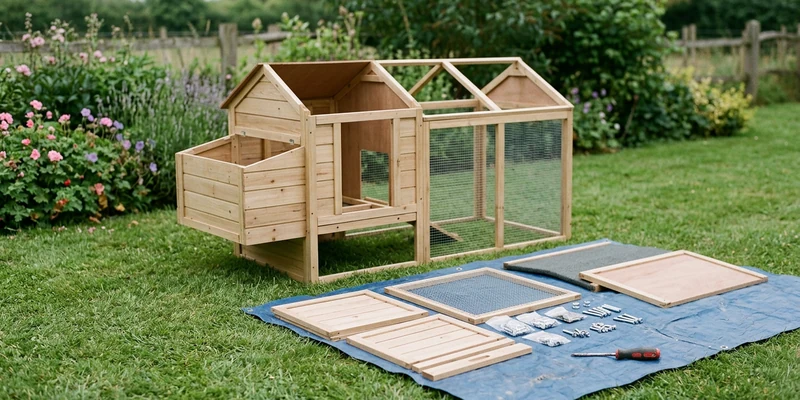
Assembly difficulty is where kit quality shows up most clearly in owner feedback. Complaints tend to cluster around a few recurring issues: pre-drilled holes that do not line up between panels, hardware bags missing pieces, and instructions that skip steps a first-time builder needs spelled out. None of these are disqualifying on their own, but a kit with a pattern of assembly complaints across multiple reviews is worth avoiding regardless of how the finished photos look.
Set aside more time than the listing suggests, particularly for a first build, and check whether replacement parts are available if something arrives damaged or missing, since that is a common friction point once a kit is already partially assembled.
Common Mistakes When Buying a Coop Kit
- Choosing the cheapest kit without checking the material. Particleboard and unsealed OSB fail quickly outdoors and offer little predator resistance.
- Trusting the listed maximum bird capacity. Plan for fewer birds than the stated number for comfortable, low-stress housing.
- Assuming factory mesh is predator-proof. Most kit mesh is closer to chicken wire and often needs a hardware cloth upgrade.
- Skipping the ground-level check. A kit without a floor or wire skirt needs a dig barrier added before it goes into service.
- Ignoring assembly reviews. A kit with recurring complaints about missing hardware or misaligned holes will likely cause the same problems for you.
Frequently Asked Questions
Is a chicken coop kit as good as a coop built from scratch? A well-made kit in solid wood or coated metal can hold up just as well as a scratch build. The variation in kit quality is wide, so material and mesh matter more than whether it came as a kit.
How much space should a coop kit have per chicken? A common guideline is roughly 4 sq ft of indoor floor space per bird, treating the manufacturer’s stated maximum capacity as an upper limit rather than a target.
Do chicken coop kits come predator-proof? Not usually. Many kits ship with lightweight mesh that functions more like chicken wire, so budget for a hardware cloth upgrade on windows, vents, and run panels.
Is wood or metal better for a coop kit? Wood generally insulates better in cold climates, while metal resists rot in wet conditions. Both work well when properly ventilated and reinforced against predators.
How long does a chicken coop kit take to assemble? It varies by kit size and design, but budget more time than the listing suggests, especially for a first build, and check reviews for recurring assembly complaints beforehand.
Can I add an automatic door to a coop kit? Most kits with a standard pop door opening can accommodate one. Our automatic coop door guide covers what to check for fit.
The Bottom Line
A chicken coop kit can save real time over building from scratch, but the material, mesh, and hardware quality vary enormously between listings that look similar in photos. Check the build material, size the kit to fewer birds than its stated maximum, and plan to upgrade mesh and latches to predator grade before the flock moves in.