Last updated: August 16, 2026
A large chicken coop becomes necessary faster than most new keepers expect. Chicken math is a real phenomenon, a starter flock of four or five hens quietly grows into a dozen, and a coop sized for the original plan turns cramped, stressful, and harder to keep clean well before anyone intended to upgrade.
Buying for a bigger flock changes the math on space, ventilation, and predator proofing all at once. This guide covers what to check before buying a large coop, the builds that come up again and again in owner feedback, and the setup details that keep a big coop from becoming a big maintenance headache.
This article contains affiliate links. If you buy through them, we may earn a commission at no extra cost to you. Learn more.
Quick Answer
Which large chicken coop should you buy?
- For a growing flock, a walk-in style large chicken coop with an attached run and hardware cloth reinforced openings gives you room to grow without an immediate rebuild.
- If storms or heavy snow are a factor where you live, prioritize a coop with a rated roof and frame over one that simply lists a larger footprint.
- Whatever you buy, check the manufacturer’s stated bird capacity against your actual flock size, since listed capacities often assume less space per bird than most keepers prefer.
What to Check Before You Buy a Large Chicken Coop
Every row below can be checked on the product listing before you buy. Getting these right up front saves a costly rebuild once the flock outgrows a coop that looked spacious in photos.
| What to check | Why it matters | What to look for |
|---|---|---|
| Stated bird capacity | Manufacturer capacity numbers often assume tighter space than keepers prefer | The listed capacity, then plan for fewer birds than that number for comfortable space |
| Ventilation | A sealed coop traps moisture and ammonia, which harms respiratory health | Vents positioned high on the walls, ideally adjustable for different seasons |
| Predator resistant construction | A bigger coop has more edges, seams, and openings for predators to test | Hardware cloth over any mesh, secure latches, and a floor or apron that blocks digging |
| Nesting box count | Too few boxes for a bigger flock leads to egg laying competition and breakage | Roughly one box for every three to four hens as a general guide, adjusted to your flock |
| Roof and frame rating | Larger structures face more wind and snow load than small coops | A frame and roofing material rated for your regional weather, per the manufacturer’s specification |
| Cleaning access | A bigger coop with poor access becomes a chore keepers avoid | Wide doors, removable trays, or a walk-in design you can actually stand inside |
A larger coop also means securing the door properly every evening. Our automatic coop door guide covers hands free options sized for bigger openings.
Walk-In, Wooden, and Metal Frame Builds
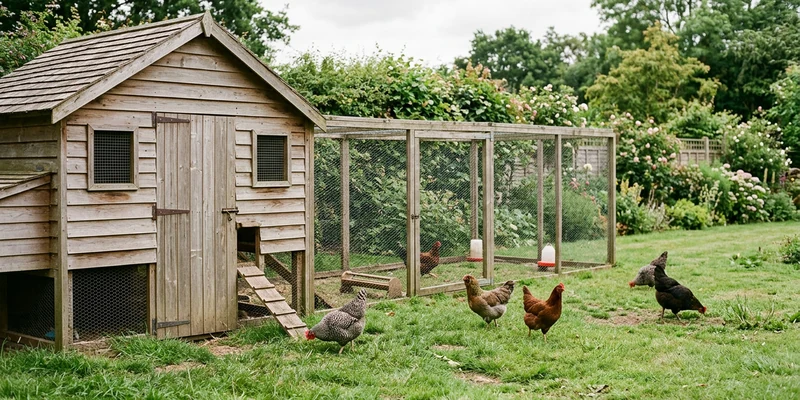
Walk-in coops let you stand upright inside, which makes daily cleaning, egg collection, and general upkeep dramatically easier than crouching into a small hutch. They typically combine a covered coop section with an attached run, and the larger footprint suits flocks that have outgrown a starter coop or keepers planning for growth from the start.
Wooden coops tend to offer better insulation and a more traditional look, while metal frame coops, often paired with mesh panels, resist rot and hold up well in wet climates, though they can run hotter in direct summer sun without added shade. Either material works well when it is properly ventilated and reinforced against predators, so material comes down to climate and maintenance preference more than one being objectively better.
Why Predator Proofing Gets Harder as Coops Get Bigger
Every seam, vent, and mesh panel on a coop is a potential entry point, and a larger structure simply has more of them. Standard chicken wire keeps chickens in but does little to keep a determined raccoon or weasel out, since both can reach through the gaps. Hardware cloth, with its smaller openings, is the standard upgrade wherever mesh is used on windows, vents, or run panels.
Owner reviews of larger coops consistently flag the same weak points: latches that a raccoon can work open with dexterous paws, and gaps where the coop meets the ground that allow digging predators underneath. Checking both before the coop goes into service, rather than after a loss, is worth the extra hour.
Our Top Picks at a Glance
How we chose: we compared widely available large chicken coops on stated capacity, ventilation design, predator resistant construction, and how consistently owners report durability through weather and daily use. Selections lean on manufacturer specifications and recurring themes in customer reviews rather than any hands-on trial of our own.
🏆 Best Overall
A walk-in wooden coop with an attached run, sized for a flock that has grown past starter housing, with nesting boxes and ventilation built in from the factory.

⭐ Upgrade Pick
A premium walk-in coop and run combination with reinforced construction and a larger footprint, built for keepers planning ahead for a bigger flock rather than reacting to one.

💛 Best Value
A large metal frame coop with an attached run, covering the essentials of space and predator resistant mesh at a lower cost than a comparable wooden walk-in.

Picks by Situation: Cold Climates and Extra Predator Pressure
Two situations push keepers toward a different large coop than the everyday default: cold winter climates, and properties with heavy predator pressure.
❄️ Best for Cold Climates
A large coop with solid wall construction and a rated roof designed to handle winter conditions, worth checking against your region’s typical snow load before buying.

🦝 Best for Predator Pressure
A large coop upgraded with hardware cloth reinforcement across every mesh panel and vent, the configuration to choose if raccoons, weasels, or hawks are a known problem where you keep birds.

Setting Up a Big Coop That Stays Easy to Maintain
Plan the layout before assembly: nesting boxes in a dim, quiet corner, roosts higher than nesting boxes so hens do not sleep in the boxes and soil them, and feed and water positioned where they stay out of direct droppings. Leave enough clearance around the coop itself for cleaning access, since a coop wedged against a fence or wall becomes harder to maintain than the square footage alone suggests.
Once the structure is in place, securing it every evening matters as much as the build quality. Our automatic coop door guide covers hands free options, and our chicken waterer guide covers keeping water clean in a bigger run.
Common Mistakes to Avoid
- Buying to today’s flock size instead of tomorrow’s. Chicken math is real, and a coop with room to grow avoids a rebuild within a year or two.
- Trusting the manufacturer’s maximum capacity number. Listed capacities often assume tighter space than most keepers find comfortable. Plan for fewer birds than the stated maximum.
- Using standard chicken wire instead of hardware cloth. Chicken wire keeps chickens contained but does little to stop a determined predator from reaching through.
- Skipping ventilation in favor of a sealed, weatherproof look. Trapped moisture and ammonia buildup harm respiratory health more than a properly vented, slightly drafty coop.
- Ignoring the ground level seam where the coop meets the yard. Digging predators exploit gaps at the base more often than the walls or roof.
Where to Go From Here
A bigger coop changes daily routines beyond just space. Our automatic coop door guide covers securing a wider opening, and our chicken feed guide and chicken waterer guide cover feeding and watering a larger flock without constant refills.
Frequently Asked Questions
How much space do chickens need in a large coop? Space needs vary by breed and how much outdoor run access birds get, so check the manufacturer’s stated capacity and then plan for somewhat fewer birds than that maximum for comfortable, low stress housing. A coop marketed as a chicken coop for 12 chickens, for example, is worth measuring against your own space preferences rather than taking the listed number at face value.
How many nesting boxes does a large flock need? A common general guide is one box for every three to four hens, though hens often prefer a favorite box regardless of how many are available, so extra boxes reduce competition rather than eliminate it entirely.
Is a wooden or metal coop better for a large flock? Both work well when properly ventilated and predator proofed. Wood tends to insulate better in cold climates, while metal frame coops resist rot in wet conditions, so the better choice depends on your climate and maintenance preferences.
How do I predator proof a large chicken coop? Replace standard chicken wire with hardware cloth on any mesh panel, secure latches that a raccoon cannot work open, and check the ground level seam for gaps that allow digging predators underneath.
Do I need an automatic door on a large coop? It is not required, but a bigger coop often has a wider opening that takes longer to secure by hand every evening, which is why many keepers add an automatic coop door once they upgrade to a larger structure.
The Bottom Line
The best large chicken coop for a growing flock is a walk-in style build with an attached run, hardware cloth reinforced openings, and ventilation designed for your climate. Buy ahead of your current flock size rather than at the edge of it, check the stated capacity against real space needs, and predator proof every seam before the coop goes into service.