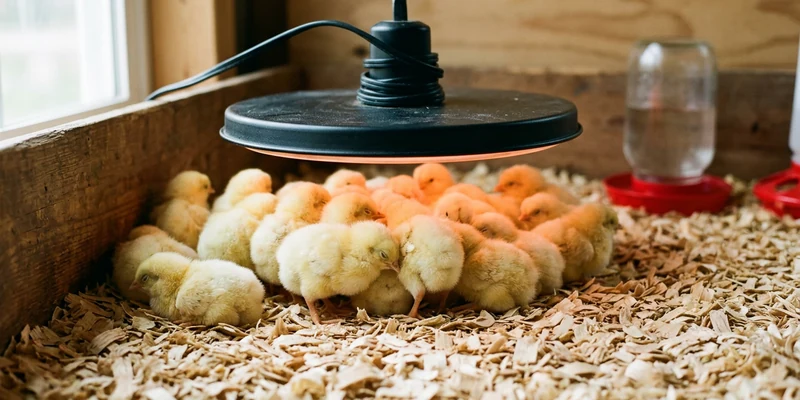
Last updated: August 16, 2026
A heat lamp for chickens shows up in most brooder setups and in plenty of coops during a hard winter, but it is also one of the most common causes of barn and coop fires in the country. Dry bedding, dust, and a bulb that runs hot for weeks at a time are a genuinely dangerous combination if the fixture is not mounted and maintained correctly.
That does not mean heat lamps are off limits, it means the mounting hardware and the habits around them matter as much as the bulb itself. This guide covers what separates a heat source that keeps chicks warm safely from one that becomes a hazard, along with the safer alternatives more keepers are switching to.
This article contains affiliate links. If you buy through them, we may earn a commission at no extra cost to you. Learn more.
Quick Answer
Which heat lamp for chickens should you buy?
- For a brooder of young chicks, a clamp style heat lamp with a ceramic socket and a secondary safety chain or bracket, mounted well clear of bedding, is the standard setup.
- If fire risk worries you more than a small increase in cost, a radiant heat plate is a genuine alternative that warms chicks by contact instead of an open bulb.
- Whatever you use, follow the manufacturer’s clearance and mounting instructions exactly. No lamp is safe hung from a single clip over dry bedding.
What to Check Before You Buy a Heat Lamp
Every row below can be checked on the product listing or the fixture itself before you buy. These are the details that separate a safe setup from a preventable accident.
| What to check | Why it matters | What to look for |
|---|---|---|
| Socket type | Cheap sockets can crack or fail under sustained heat | A ceramic socket rated for the wattage of bulb you plan to run |
| Mounting hardware | A dropped lamp onto bedding is the single biggest fire risk | A clamp plus a separate safety chain or bracket, not the clamp alone |
| Guard or cage | Prevents direct contact between the bulb and bedding, feathers, or curious chicks | A wire guard included or sold as a matching accessory |
| Cord and housing quality | Runs for hours at a time in a dusty environment | A heat resistant cord and a housing that stays cool to the touch on the outside |
| Bulb type | Affects both heat output and whether light disrupts chick sleep cycles | An infrared bulb for heat with minimal visible light, per the manufacturer’s rating |
| Alternative: radiant plate | Removes the open bulb and glass breakage risk entirely | A radiant heat plate sized for your brooder, as a lower risk substitute |
Chicks that outgrow a brooder heat source are usually close to needing full flock housing. Our large chicken coop guide covers what to look for once they are ready to move out.
Heat Lamps vs Radiant Plates
Traditional clamp lamps use an infrared bulb to radiate heat across a brooder, and they are inexpensive and widely available, which is why they remain common. The tradeoff is real: a bare bulb generates significant surface heat, runs continuously for weeks, and depends entirely on secure mounting to stay safely away from dust and bedding.
Radiant heat plates work differently. Chicks huddle underneath a heated panel and warm up by contact rather than by radiant bulb heat filling the whole brooder, similar to how a hen would brood them. There is no glass to break and no open bulb, which is why many keepers who have dealt with a close call, or simply want to remove the risk, switch over even though the upfront setup looks different from a familiar heat lamp.
Fire Safety Is Not Optional
A heat lamp left running unattended, clipped to a single point of contact, or positioned near dry bedding or dust is a documented cause of barn, shed, and coop fires. Always follow the clearance distances, mounting instructions, and wattage limits printed in your fixture’s manual rather than a general rule of thumb, since these vary by product and by bulb.
Beyond correct mounting, keep the fixture cord away from where birds can peck or tangle it, check the setup daily for a loose clamp or dust buildup, and never leave a lamp running in a brooder that is not being checked on regularly. If any part of the setup feels improvised, that is the signal to fix it before running the lamp again, not after.
Our Top Picks at a Glance
How we chose: we compared widely available heat sources on socket and housing quality, included safety hardware, and how consistently keepers report safe, trouble free use over a season. Selections lean on manufacturer specifications and recurring themes in customer reviews rather than any hands-on trial of our own.
🏆 Best Overall
A clamp style heat lamp fixture with a ceramic socket and a dedicated safety chain, built for the sustained heat that a weeks long brooder setup demands.

⭐ Upgrade Pick: Safer Alternative
A radiant heat plate sized for a small to mid size brooder, removing the open bulb entirely while still keeping chicks at a comfortable, adjustable height as they grow.

💛 Best Value
A standard infrared heat bulb sized to fit most existing clamp fixtures, a straightforward replacement bulb rather than a full new setup.

Picks by Situation: Full Brooders and Extra Protection
Two accessories are worth calling out separately from the main heat source, since they change how safe any setup actually is in daily use.
📦 Best Enclosed Brooder Heater
A brooder heater, sometimes marketed as an enclosed brooder lamp, built into a housing for keepers who want the heat source integrated with the brooder rather than clamped on separately.

🛡️ Best Safety Guard
A wire guard or cage accessory that fits over a heat lamp bulb, adding a physical barrier between the bulb and bedding, feathers, or curious chicks.

Setting Up a Brooder Heat Source Correctly
Mount the fixture using two independent points of attachment, the clamp plus a chain or bracket, so a single failure cannot drop the lamp into bedding. Follow your manufacturer’s listed clearance distance from bedding and brooder walls exactly, and keep dust and cobwebs cleared from the fixture housing, since accumulated dust is itself flammable near a hot bulb.
Watch the chicks, not just the thermometer, for the real signal of whether heat is right: huddling under the light means too cold, spreading to the brooder’s edges away from the light means too warm, and an even spread across the space is close to right. As chicks feather out over several weeks, heat needs drop steadily until supplemental heat is no longer needed at all.
Common Mistakes to Avoid
- Relying on a single clamp to hold the lamp. Clamps loosen with vibration and heat cycling. Always add a secondary chain or bracket.
- Positioning the lamp directly over dry bedding. Follow the manufacturer’s listed clearance rather than guessing at a safe distance.
- Leaving the lamp running unattended for long stretches without checks. A fixture that looked secure yesterday can shift, especially with active chicks bumping the setup.
- Ignoring dust buildup on the housing. Dust is flammable and insulates the fixture, pushing internal temperatures higher than the bulb rating assumes.
- Assuming any heat lamp is automatically safe because it is marketed for poultry. Read the specific manual for your fixture and bulb combination rather than assuming general familiarity is enough.
Where to Go From Here
Brooder heat is a temporary stage. Once chicks feather out, they move toward the same daily care as the rest of your flock, covered in our chicken waterer guide and chicken feed guide. If a new brooder heater is also on your list because you are hatching your own chicks, our egg incubator guide covers that earlier step.
Frequently Asked Questions
Are heat lamps safe for chicken coops? They can be, when mounted with a secondary safety chain, kept clear of bedding at the manufacturer’s listed distance, and checked regularly. Follow your specific fixture’s manual rather than a general rule, since clearance and wattage limits vary by product.
What is a safer alternative to a heat lamp? A radiant heat plate warms chicks by contact rather than an open bulb, removing the glass breakage and open flame risk that comes with traditional clamp lamps.
How long do chicks need a heat source? Heat needs drop gradually over several weeks as chicks feather out, and most keepers reduce or remove supplemental heat once feathering is complete and outdoor temperatures allow it. Watch chick behavior, not just a calendar, to judge readiness.
Can a heat lamp start a fire? Yes. Improperly mounted heat lamps near dry bedding or dust are a documented cause of coop and barn fires. A secondary mounting point, correct clearance, and regular dust checks reduce that risk significantly.
Do adult chickens need a heat lamp in winter? Healthy adult chickens with proper feathering tolerate cold better than many keepers expect, and a draft free, well ventilated coop often matters more than supplemental heat. If you are considering a heat source for adult birds, weigh the fire risk carefully and consider a heated waterer instead to solve the most common winter problem, frozen water.
The Bottom Line
The best heat lamp for chickens is one mounted with redundant hardware, kept at the manufacturer’s listed clearance from bedding, and checked regularly, or a radiant heat plate if you want to remove the open bulb risk entirely. Fire safety is not a detail to skip past. Read your specific fixture’s manual and follow it exactly, every time you set it up.