Last updated: August 16, 2026
New keepers ask how much to feed chickens per day expecting a clean number, and the honest answer is that there is not one number that fits every flock. A bantam eating alongside a heavy dual purpose breed, a summer flock that forages half its diet outside, and a winter flock cooped up in the cold all go through feed at different rates, which is exactly why most experienced keepers feed free choice rather than measuring out a fixed daily ration.
This guide covers how daily feed amounts actually work, plus the other half of the equation that new keepers overlook: storing that feed so it stays fresh, dry, and out of reach of pests until it is eaten.
Quick Answer
How much should you feed chickens each day?
- Most keepers feed free choice, meaning feed is available at all times, and let each bird self regulate intake.
- Exact amounts vary with breed size, season, laying status, and how much a flock forages outside, so follow the feeding guide printed on your specific feed bag rather than a single fixed number.
- Store unopened bags off the ground in a dry space, and move opened feed into a sealed, rodent proof container.
- Buy only as much as your flock will eat within a reasonable window, since feed loses nutritional value over time even when stored well.
What Actually Changes Daily Intake
Rather than a single number, think in terms of the factors that push intake up or down for your specific flock.
| Factor | Effect on intake |
|---|---|
| Breed size | Larger, heavier breeds generally eat more than bantams or smaller breeds |
| Season | Cold weather tends to raise intake as digestion helps generate body heat |
| Laying status | Actively laying hens generally eat more than birds not currently laying |
| Foraging access | Flocks with yard or pasture access eat less purchased feed than confined flocks |
| Treats and scratch | Heavy treat feeding can reduce how much complete feed a bird eats, which is not necessarily a good trade |
Why There Is No Single Daily Number
Feed bag labels typically include a general feeding guide, and that guide is a far more reliable starting point than any single figure repeated online, because it reflects the actual formulation and density of that specific feed. Free choice feeding, keeping feed available at all times rather than rationing it, lets a flock adjust its own intake to season, activity level, and individual bird needs without a keeper needing to calculate anything daily.
The main exception is deliberate rationing for weight management in certain situations, which is a judgment call best made with guidance from an experienced breeder or a veterinarian rather than a general guide like this one.
Free Choice vs Rationed Feeding
Free choice feeding is the standard approach for most backyard flocks: fill the feeder, let birds eat through the day, and refill as needed. It reduces the risk of underfeeding, supports steady laying, and matches how chickens naturally forage in short bursts throughout the day rather than in one or two large meals.
Rationed feeding, offering a measured amount at set times, is less common in backyard settings and mostly comes up in specific management situations. For the average backyard flock, free choice with a quality complete feed, kept to a sensible size relative to your flock so it does not sit stale too long, works well.
Storing Feed the Right Way
Knowing how to store chicken feed properly is just as important as buying a good feed in the first place, since even the best formulation loses value once moisture, heat, or pests get to it.
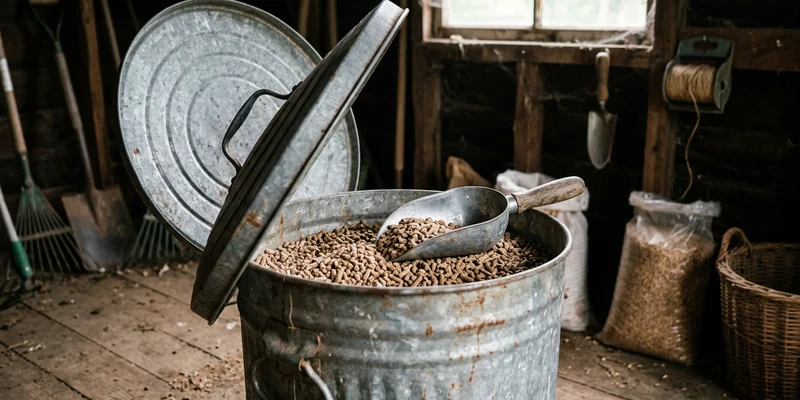
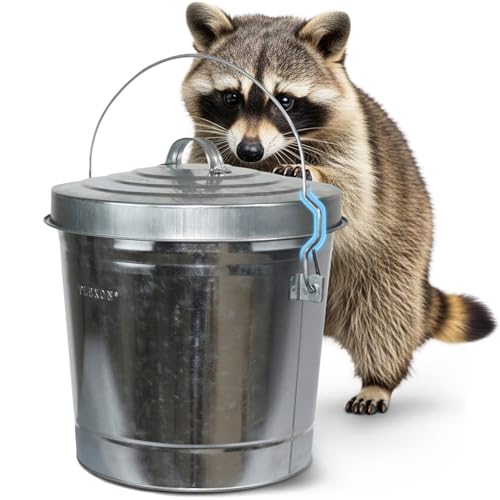
Feed is a perishable product, not a shelf stable pantry item. Once a bag is opened, humidity, heat, and pests all work against the nutrition inside it, and rodents are drawn to feed stored in anything they can chew through. The standard fix is a metal or heavy duty plastic bin with a tight, animal proof lid, kept in a dry space off the ground rather than directly on a concrete or dirt floor where moisture can wick upward.

Keep unopened bags in a similarly dry, covered space, and avoid storing feed directly inside the coop itself, where humidity from the birds and easy rodent access both work against you. If you are planning a new coop, our chicken coop plans guide covers layouts that leave room for a dedicated, separate feed storage area.
Signs Feed Has Gone Bad
Watch for a musty or sour smell, visible mold, clumping that suggests moisture got in, or signs of rodent or insect activity like droppings or chewed packaging. Any of these signs means the feed should be discarded rather than fed out, since moldy or spoiled feed can genuinely harm a flock, not just waste money.
Buying feed in a quantity your flock will realistically finish within a reasonable window, rather than one enormous bag that sits half full for months, is a simple way to reduce how much feed ever reaches the point of going stale in the first place. A quick sniff and visual check each time you scoop feed takes seconds and catches most problems well before they become a flock health issue.
Buying Feed in Bulk vs Smaller Bags
A larger bag usually costs less per pound, which makes bulk buying tempting, but it only pays off if your flock and your storage setup can actually keep up. A big flock going through feed quickly can reasonably buy in bulk without much of it sitting around long enough to lose freshness. A small backyard flock of a few hens, on the other hand, may be better served by smaller, more frequent purchases, even at a slightly higher per pound cost, simply because the bag gets finished before quality starts to slip.
Storage capacity matters here too. There is little point buying a large bag if you do not have a sealed, rodent proof container big enough to hold it, since a bag left partially in its original packaging defeats much of the purpose of buying in bulk in the first place.
Common Mistakes With Daily Feeding and Storage
- Chasing a single “correct” daily number. Intake varies by breed, season, and laying status. Follow the guide on your specific feed bag instead.
- Storing open feed in a flimsy paper or thin plastic bag long term. Transfer it to a sealed, rodent proof container as soon as it is opened.
- Keeping feed storage inside the coop. Humidity and easy rodent access both work against fresh feed there.
- Buying more feed than a flock will eat in a reasonable time. Feed loses nutritional value over time, even stored well.
- Feeding out moldy or musty smelling feed to save money. Discard it. Spoiled feed can harm a flock, not just waste a purchase.
Frequently Asked Questions
How much feed does a chicken eat per day? It varies by breed size, season, laying status, and foraging access, so there is no single reliable number. Follow the feeding guide printed on your specific feed bag.
Should I free feed chickens or ration their food? Free choice feeding, keeping feed available at all times, is the standard approach for most backyard flocks and lets birds self regulate intake.
How long does an opened bag of chicken feed stay good? It depends on storage conditions, but feed loses nutritional value over time even when stored well, so buying an amount your flock will finish in a reasonable window helps.
What is the best container for storing chicken feed? A metal or heavy duty plastic bin with a tight, animal proof lid, kept dry and off the ground, protects feed from moisture and rodents better than the original paper bag.
Can chickens eat moldy feed? No. Moldy or spoiled feed can harm a flock. Discard it rather than feeding it out, even if only part of the bag looks affected.
Do chickens eat more in winter? Often yes, since digestion helps generate body heat and cold weather can increase intake compared with mild seasons.
The Bottom Line
There is no single correct daily feed amount for chickens, since breed size, season, laying status, and foraging access all shift intake in different directions, which is why free choice feeding with a quality complete feed works for most backyard flocks. Pair that with dry, sealed, rodent proof storage and a bag size your flock will actually finish, and feed quality stops being a moving target.