Last updated: August 16, 2026
A dependable chicken waterer matters as much as feed, and it fails in quieter ways. A knocked over dish or a frozen base does not announce itself the way an empty feeder does, and hens that go without clean water for a stretch will lay fewer eggs before you notice anything else is wrong.
The waterer market ranges from a simple gravity fount to nipple based automatic systems, and the right pick depends less on brand and more on flock size, climate, and how often you can realistically check on it. This guide covers what separates a waterer that lasts from one that leaks, tips over, or freezes solid the first cold snap.
This article contains affiliate links. If you buy through them, we may earn a commission at no extra cost to you. Learn more.
Quick Answer
Which chicken waterer should you buy?
- For most backyard flocks, a gravity fed poultry waterer sized to your flock and checked daily covers the basics without much fuss or moving parts to fail.
- If you want to check water less often or you keep a larger flock, an automatic nipple waterer connected to a bucket or reservoir cuts down on refills and keeps water cleaner than an open dish.
- Whatever you buy, plan for freezing weather separately. A heated chicken waterer or a heater base is worth adding well before the first hard frost.
What to Check Before You Buy a Chicken Waterer
Every row below can be checked against a product listing before you buy. Getting these right means fewer refills, less algae scrubbing, and water your flock will actually drink.
| What to check | Why it matters | What to look for |
|---|---|---|
| Capacity | Sets how often you need to refill relative to your flock size | The gallon or liter capacity listed by the manufacturer, matched to how many birds you keep |
| Waterer type | Gravity founts, nipple systems, and cup waterers behave very differently | Gravity for simplicity, nipples for cleaner water, cups for reduced spillage |
| Material | Affects cleaning, algae growth, and how it holds up outdoors | Food grade plastic or galvanized metal that resists rust and is easy to scrub |
| Freeze resistance | Standard waterers crack or stop working once temperatures drop | A heated chicken waterer, or a separate heater base rated for your winter lows |
| Cleaning access | Algae and droppings build up fast in stagnant water | A wide opening or removable top that you can actually scrub by hand |
| Placement stability | Tipped waterers waste water and soak bedding | A wide base, hanging option, or mounting bracket that keeps it off the ground |
Water is only useful if your flock is also eating a properly formulated diet. Our chicken feed guide covers what to look for on the bag once hydration is sorted out.
Gravity, Nipple, and Cup Systems Compared
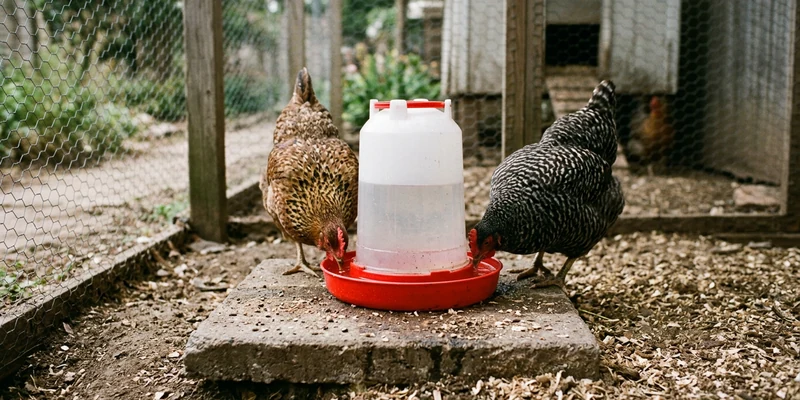
Gravity fed waterers are the classic choice: a reservoir sits on top of a base or bucket, and water flows down to a trough as birds drink. They are simple, inexpensive to replace, and easy to understand, but the open trough collects droppings, bedding, and algae faster than closed systems, which means more frequent scrubbing.
Nipple and cup systems close off the water source almost entirely. Chickens peck a small nipple or cup to release a few drops at a time, which keeps the supply far cleaner and cuts down on spillage that turns bedding to mud. The tradeoff is a slightly steeper learning curve, since young or newly introduced birds sometimes need a few days to figure out how the nipples work.
Why Freeze Protection Deserves Its Own Plan
A waterer that works perfectly all summer can be frozen solid by the first real cold snap, and a flock without liquid water will not maintain the intake it needs. A heated chicken waterer, or a plug in heater base added to an existing gravity waterer, is the most common fix keepers settle on once they have dealt with chipping ice out of a bowl at dawn.
Reviews of heated waterers consistently mention how much time they save on cold mornings compared with swapping frozen units for warm ones twice a day. If you keep birds anywhere that sees regular freezing temperatures, budget for this as a separate purchase rather than an afterthought.
Our Top Picks at a Glance
How we chose: we compared widely available chicken waterers on capacity, build material, cleaning access, and how consistently keepers report leaks, cracks, or algae buildup over a season of use. Selections lean on manufacturer specifications and recurring themes in customer reviews rather than any hands-on trial of our own.
🏆 Best Overall
A gravity fed poultry waterer with a wide fill opening and a stable base, sized for a typical backyard flock. Simple to clean, simple to refill, no power or plumbing required.

⭐ Upgrade Pick
An automatic chicken waterer kit built around a nipple system that connects to a bucket or larger reservoir, cutting refill frequency and keeping the water supply noticeably cleaner than an open trough.

💛 Best Value
A basic galvanized metal poultry waterer that covers the fundamentals without extra features, a solid choice for keepers who check on their flock daily anyway.

Picks by Situation: Winter and Larger Flocks
Two situations push keepers toward a different waterer than the everyday default: freezing winters, and flocks big enough that a standard waterer needs refilling more than once a day.
❄️ Best for Winter
A heated chicken waterer with a built in element that keeps water from freezing through cold nights, removing the twice daily ice chipping routine entirely.

🐔 Best for Larger Flocks
A high capacity poultry waterer or bucket style reservoir built to cut refill trips for keepers with a dozen or more birds sharing the same water source.
Placement, Cleaning, and Keeping Water Cool
Keep the waterer off bare ground, either on a low stand, hung at chest height for the birds, or set on a paver, so droppings and scratched up bedding do not fall straight into it. Shade matters too: direct summer sun heats water quickly and speeds up algae growth, so a spot under the coop overhang or a shaded corner of the run keeps water fresher longer.
Scrub the waterer with a brush and a mild diluted vinegar rinse on a regular schedule rather than waiting until it looks obviously dirty, since a thin algae film can build up before it is visible. If you are laying out a new setup, our large chicken coop guide covers run layouts that make it easier to place feed and water where they stay clean.
Common Mistakes to Avoid
- Placing the waterer directly on bedding or dirt. It gets kicked over, contaminated, and muddy far faster than one raised even a few inches.
- Ignoring freeze protection until it freezes. Add a heated waterer or heater base before the first hard frost, not after you find a solid block of ice.
- Skipping regular cleaning. Algae and biofilm build up in open troughs even when the water looks clear, and chickens drink less from water that smells or tastes off.
- Undersizing capacity for the flock. A waterer that needs refilling twice a day gets neglected. Match capacity to bird count and your realistic refill schedule.
- Introducing nipple waterers without a transition period. Young or newly switched birds may need a few days and a little guidance to learn how nipples work, so keep a backup water source available while they adjust.
Where to Go From Here
Water needs change with the seasons more than almost anything else in coop care. Read our heat lamp guide if winter care in general is on your mind, and pair your waterer with a properly formulated diet using our chicken feed guide.
Frequently Asked Questions
How often should I clean a chicken waterer? Rinse and refill daily, and do a full scrub with a brush and a diluted vinegar solution on a regular weekly schedule, since algae and biofilm build up before they are always visible.
Do chickens need a heated waterer in winter? In climates with regular freezing temperatures, yes, a heated chicken waterer or a heater base keeps water liquid without twice daily ice removal. In milder climates, checking a standard waterer more often may be enough.
How much water does a chicken drink per day? Intake varies with temperature, activity, and whether hens are laying, so follow the general guidance from your waterer’s capacity listing rather than a single fixed figure, and watch that the supply never runs dry.
Are nipple waterers better than open trough waterers? Nipple systems keep water noticeably cleaner since birds cannot step, scratch, or defecate into a closed source. Open trough waterers are simpler and need no learning period, which suits some keepers better.
Can I use a heat lamp to keep water from freezing? A heat lamp aimed near a waterer is a fire risk around bedding and is not the intended use for most heat lamp products. A dedicated heated waterer or heater base, built for that job, is the safer option. See our heat lamp guide for what those products are actually designed to do.
The Bottom Line
The best chicken waterer for most flocks is a gravity fed unit sized to your bird count, checked and cleaned on a regular schedule, with a dedicated heated waterer added once freezing temperatures arrive. Step up to a nipple system if cleaner water and fewer refills matter more than simplicity, and size capacity to how often you can realistically check on your flock.